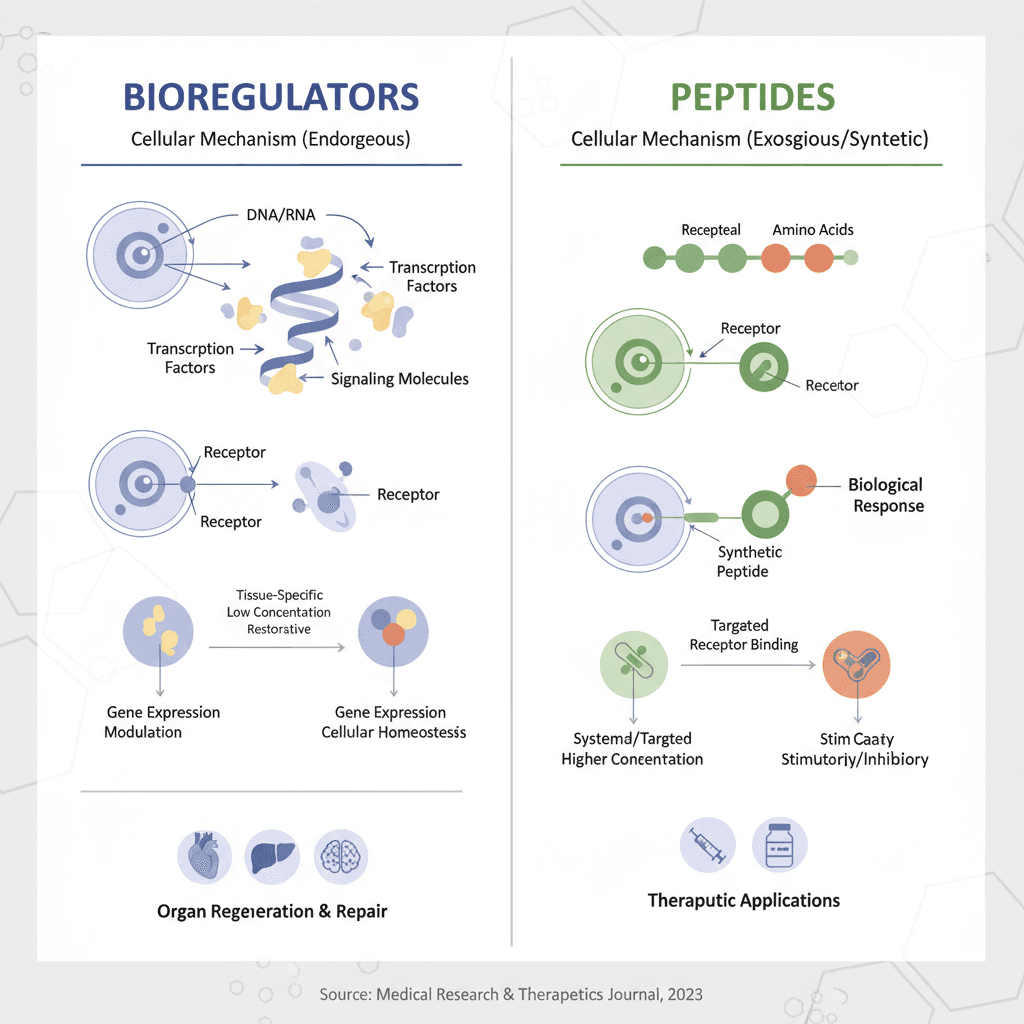
Bioregulators are short-chain peptides, typically composed of 2 to 7 amino acids, that act as highly specific molecular messengers within the human body. Initially developed and characterized in Russian research programs led by Professor Vladimir Khavinson, these compounds are either isolated from animal tissues or produced synthetically to mirror naturally occurring regulatory molecules found in organs and glands. Rather than providing broad nutritional support, bioregulators are designed to influence deep cellular processes, supporting the long-term structural and functional integrity of tissues that are stressed, aging, or recovering from damage.
🧬How Bioregulators Work
Bioregulators are distinguished by their ability to enter cells, reach the nucleus, and interact with DNA to modulate gene expression in a subtle but meaningful way. At the epigenetic level, these short peptides can upregulate genes associated with repair, antioxidant defense, and cellular resilience while downregulating genes tied to inflammation, fibrosis, or degenerative change. By fine-tuning transcription and protein synthesis, bioregulators help restore the original "program" of the cell, supporting more youthful patterns of function without forcing the body into artificially elevated or suppressed states.
🎯Tissue-Specific Precision
Each bioregulator is associated with a particular organ or system, reflecting the tissue it was originally isolated from and the gene networks it influences. For example, thymus bioregulators are used to support immune balance, pineal and cerebral cortex peptides are directed toward sleep, mood, and cognition, while vascular and cardiac bioregulators aim at circulatory and cardiovascular integrity. This tissue specificity allows practitioners and self-experimenters to design highly targeted protocols that address concrete priorities—such as brain health, hormonal stability, or vascular aging—by delivering precise regulatory signals where they are needed most.
🚀Applications in Health and Longevity
In clinical and longevity-focused settings, bioregulators are being explored as tools to maintain organ reserve, slow functional decline, and enhance recovery from chronic stressors or illness. Protocols often involve low doses taken over defined cycles, sometimes repeated a few times per year, with the aim of nudging biological systems back toward more optimal set points rather than chasing short-lived symptomatic changes. Emerging evidence and clinical experience suggest potential benefits across domains such as immune robustness, neurocognitive performance, metabolic regulation, bone and joint health, and cardiovascular resilience, making bioregulators an increasingly important part of advanced preventive and restorative strategies.
⚖️How Bioregulators Differ From Peptides
All bioregulators are peptides, but not all peptides qualify as bioregulators, and this distinction matters when designing a protocol or evaluating results. Conventional therapeutic peptides often act like potent signals that bind to receptors at the cell surface to trigger relatively immediate, macro-level effects—such as boosting growth hormone, altering appetite, or rapidly shifting inflammation—whereas bioregulators tend to be shorter, gentler molecules that work over longer time horizons by modulating gene expression and cellular identity from within the nucleus.
In practice, this means broad-acting peptides can feel more like "on/off switches" for pathways, while bioregulators function more like "fine-tuning dials" that gradually recalibrate the system, making them particularly suited for long-term organ support, graceful aging, and foundational repair rather than acute performance spikes.
Bioregulators at a Glance