Prof. VladimirKhavinson
"The task of gerontologists is to develop methods that reliably preserve the quality of life for as long as possible."
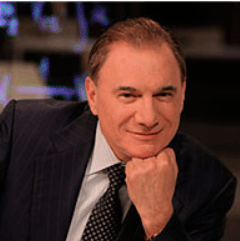
A Legacy of Discovery
Professor Vladimir Khatskelevich Khavinson (1946-2024) was a world-renowned gerontologist, scientist, and the founding Director of the St. Petersburg Institute of Bioregulation and Gerontology. He served as President of the European Region of the International Association of Gerontology and Geriatrics (IAGG) from 2011-2015.
His journey began in the early 1970s at the Kirov Military Medical Academy in the Soviet Union. Tasked by the Kremlin with finding ways to protect soldiers from radiation, laser weapons, and the extreme stress of the battlefield, Khavinson and his team made a groundbreaking discovery: short-chain peptides (2-7 amino acids) could restore organ function at the genetic level, acting as epigenetic switches.
Over the next 40+ years, he oversaw the development of 6 pharmaceutical drugs and 64 dietary supplement bioregulators, holding over 196 patents. His research demonstrated that these peptides could increase the lifespan of laboratory animals by 20-40% and significantly improve health outcomes in humans.
1946
Born November 27 in Cottbus, Germany. Champion boxer and track athlete.
Early 1970s
Discovery of the link between short-chain peptides and gene expression at the Kirov Military Academy. Secret research program for USSR Ministry of Defense begins.
1980s
Development of Thymalin (immune system) and Epithalamin (pineal gland) for military use during the Afghanistan war and Chernobyl disaster recovery efforts.
1990
Awarded USSR Council of Ministers' Prize for introducing peptide bioregulators in healthcare and veterinary practice.
1991
Received Russian Academy of Sciences Prize for groundbreaking peptide research.
1992
Founded the St. Petersburg Institute of Bioregulation and Gerontology (holds UN consultative status).
1996
Nominated for the Nobel Prize in Medicine for his discovery that short-chain peptides act as gene-switches. Received Nobel Prize Winner P. Kapitsa' Memorial Medal "Author of Scientific Discovery".
2000s
Large-scale clinical studies with Gazprom employees and development of oral bioregulator supplements. Published "Peptides and Ageing" (2002) and "Gerontological Aspects of Genome Peptide Regulation" (2005).
2011-2015
Served as European Chair (President) of the International Association of Gerontology and Geriatrics (IAGG).
2016
Awarded the Order of Friendship by President Vladimir Putin for significant contributions to healthcare and medical science development.
2024
Passed away on January 6 at the age of 77 in Saint Petersburg, Russia. His legacy continues through the Institute and the thousands of researchers he mentored.
🏆 Honors & Positions
- • IAGG European President (2011-15)
- • Order of Friendship (2016)
- • Nobel Prize Nominee (1996)
- • USSR Council of Ministers' Prize (1990)
- • Russian Academy of Sciences Member
- • Colonel of Medical Service (Retired)
🔬 Scientific Impact
- • 775+ scientific publications
- • 196 patents (Russian & International)
- • 6 pharmaceutical preparations
- • 64 dietary supplement bioregulators
- • 200+ PhD & Doctorate theses supervised
- • Founded "Gerontology & Geriatrics" specialty in Russia
Scientific Foundation
Khavinson's work built upon earlier peptide research by Soviet scientists, but made the critical discovery that short-chain peptides (2-7 amino acids) had specific organ-regulatory effects. Unlike general nutritional peptides, these bioregulators targeted specific tissues and acted at the genetic level.
Key Mechanism
Bioregulators bind to histones (protein structures around which DNA wraps) and modify gene expression through epigenetic mechanisms—primarily DNA methylation and histone acetylation. This allows aged or damaged cells to restore youthful patterns of protein synthesis.
Continuing Legacy
Today, the St. Petersburg Institute continues his research under the leadership of his colleagues. His bioregulators are used in clinical practice across Russia and Eastern Europe, with growing adoption worldwide as more physicians discover these remarkable compounds.
Khavinson's legacy is not just the products he developed, but a fundamental shift in how we understand aging—proving that biological decline is not inevitable, but rather a reversible process of gene dysregulation.