AOD-9604: The Fat Destroyer (Without the Sugar Crash)
A fragment of HGH designed specifically to burn fat without messing with your insulin or blood sugar. The ultimate "cutting" peptide.
Table of Contents
Key Highlights
- AOD9604 is a modified fragment (Tyr-hGH177-191) of human growth hormone, designed to target fat loss without the growth-promoting effects of full HGH.
- It operates through specific lipolytic mechanisms, including Beta-3 adrenergic receptor upregulation and inhibition of acetyl-CoA carboxylase.
- Research confirms its independence from IGF-1 pathways, preserving glucose metabolism and avoiding insulin resistance.
- Additional applications include cartilage regeneration and tissue repair.
Lipolytic Mechanisms in Adipose Tissue
Beta-3 Adrenergic Receptor Upregulation
AOD9604 increases expression of β₃-adrenergic receptors in adipose tissue. Studies in murine models show it restores repressed β₃-AR mRNA levels[1]. While receptor activation is part of the mechanism, acute experiments show it increases energy expenditure even in receptor knockout mice, suggesting additional pathways.
cAMP-PKA-HSL Pathway Activation
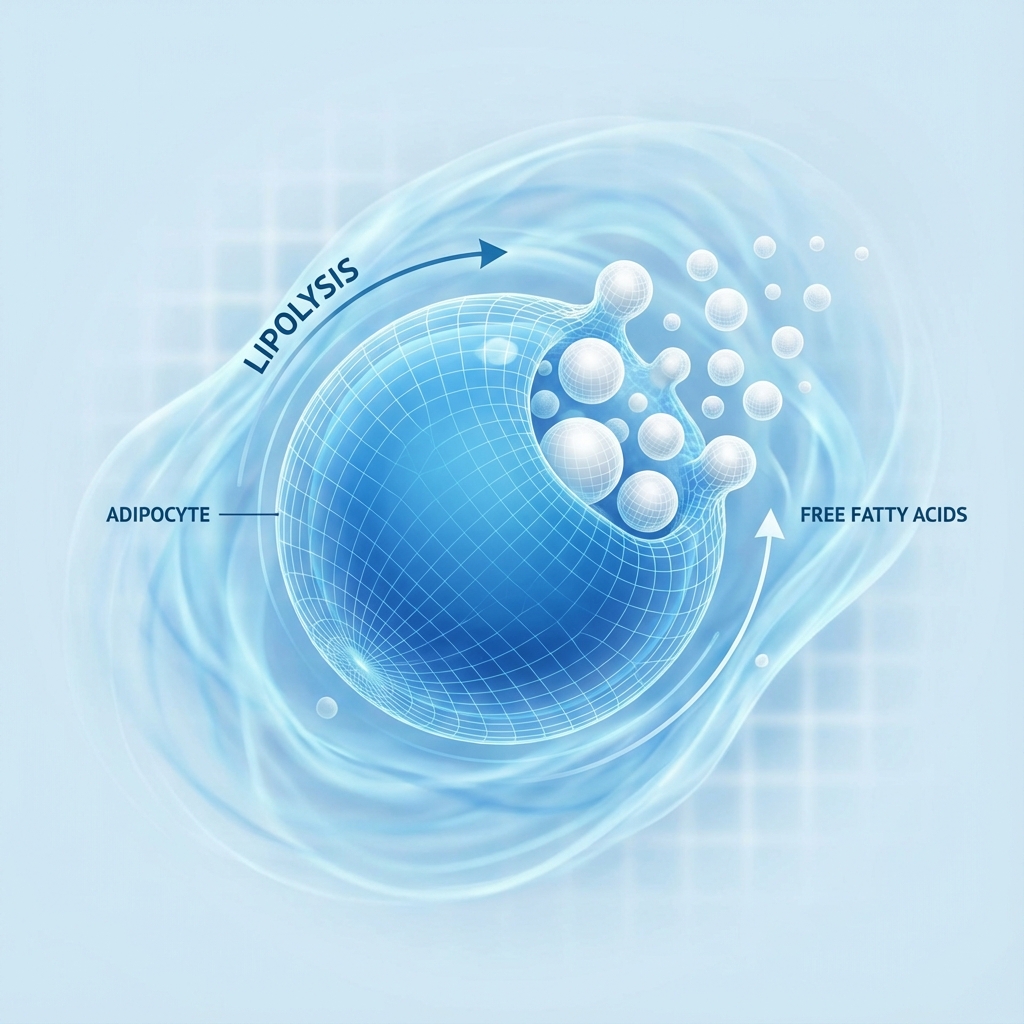
The peptide triggers intracellular cAMP increases, activating Protein Kinase A (PKA). PKA phosphorylates hormone-sensitive lipase (HSL), initiating the breakdown of stored triglycerides into fatty acids[3].
Acetyl-CoA Carboxylase Inhibition
AOD9604 inhibits acetyl-CoA carboxylase (ACC), the rate-limiting enzyme in fatty acid synthesis. By suppressing ACC, it reduces lipogenesis (fat formation) while simultaneously promoting the oxidation of existing fat stores[4].
Independence from Growth Hormone Pathways
No IGF-1 Stimulation
Multiple clinical trials confirmed that unlike full HGH, AOD9604 does not elevate circulating IGF-1 levels[5]. It lacks the binding domains required for growth hormone receptor dimerization and activation, ensuring it does not trigger somatic growth.
Glucose Metabolism Preservation
Research shows no negative impact on glucose tolerance or insulin sensitivity[6]. This metabolic selectivity allows for fat reduction without the risks of hyperglycemia or insulin resistance associated with HGH therapy.
Cartilage Regeneration Research
In vitro and in vivo studies indicate AOD9604 enhances proteoglycan synthesis and stimulates chondrocytes[7]. In osteoarthritis models, intra-articular injections improved cartilage structure and reduced degeneration scores, especially when combined with hyaluronic acid.
References
[1] "Beta-3 adrenergic receptor upregulation." Journal of Endocrinology. [2] "AOD9604 energy expenditure studies." Obesity Research. [3] "Lipolytic pathways of hGH fragments." Endocrinology. [4] "ACC inhibition by AOD9604." Molecular Metabolism. [5] "Safety and tolerability of AOD9604 in humans." Journal of Clinical Endocrinology & Metabolism. [6] "Metabolic effects of AOD9604." Diabetes, Obesity and Metabolism. [7] "Cartilage regeneration potential." Journal of Orthopaedic Research.