Comparing Retatrutide vs Semaglutide for Weight Loss
The comparison of Retatrutide vs Semaglutide is gaining attention as these two medications show promising results. Exploring their differences helps shed light on which might have the edge.
Table of Contents
What is Retatrutide ?
Retatrutide is a prominent hormone therapy in the medical field.It offers solutions for those seeking weight loss.This therapy targets various pathways and has been shown to result in clinically significant weight loss.Unlike some treatments, retatrutide uses a hormone approach that conceptualizes weight loss through a broad range of effects. It works by manipulating hormone signals that regulate the body’s metabolic processes, leading to an effective reduction in weight.The action of retatrutide provides a broad approach to addressing the mechanisms responsible for weight gain.It not only promotes weight loss but also supports overall health by integrating multiple pathways into its action.The clinical outcomes suggest that retatrutide may be effective as part of a weight management strategy.
Retatrutide Mechanism of Action
Retatrutide’s mechanism of action is gaining attention due to its unique “triple g” effects, offering a multi - faceted approach to weight loss.Retatrutide works by targeting and activating multiple hormonal and signaling pathways.It involves hormone - based intervention through glucagon - like peptide - 1(GLP - 1) receptor, glucose - dependent insulinotropic polypeptide(GIP) receptor, and the glucagon receptor.This mechanism results in enhanced metabolic effects and reduced appetite, promoting weight loss. Retatrutide works on more pathways compared to other weight loss medications, making it a potentially effective option.When acting on these pathways, retatrutide’s effects contribute to a higher percentage of weight loss, improving metabolic health outcomes for users.The mechanism of action highlights retatrutide’s ability to engage several pathways simultaneously, leading to promising results in weight management.
What is Semaglutide ?
Semaglutide is a medication primarily used to assist with diabetes management and weight loss.Classified as a GLP - 1 receptor agonist, semaglutide functions by mimicking the GLP - 1 hormone, which plays a vital role in regulating blood sugar levels and insulin production.Its primary use is in managing type 2 diabetes, making it a popular choice in diabetes management strategies. Besides its role in diabetes care, semaglutide is gaining attention for its weight loss potential, acting as a hormone therapy option to reduce body weight.The key facts surrounding semaglutide revolve around its dual benefits as a solution for both metabolic conditions and obesity.These uses make semaglutide a versatile medication in modern therapeutic approaches.
Semaglutide Mechanism of Action
The mechanism of action of semaglutide involves its role as a GLP - 1 receptor agonist.Semaglutide mimics the effects of the natural GLP - 1 hormone, which is involved in regulating pathways related to appetite and energy balance.Acting primarily in the brain, semaglutide affects the mechanism that curbs hunger and promotes a feeling of fullness, thereby facilitating weight loss solutions. MD - level research highlights how semaglutide influences the cardiovascular system, impacting heart health positively while aiding weight management.This dual action of affecting weight loss and heart pathways makes semaglutide a popular choice among those seeking effective weight loss solutions.The hormone’s mechanism provides consistent results in reducing body weight, aligning with semaglutide’s established benefits in controlling glucose levels.
Retatrutide vs Semaglutide: A Comparative View on Weight Loss
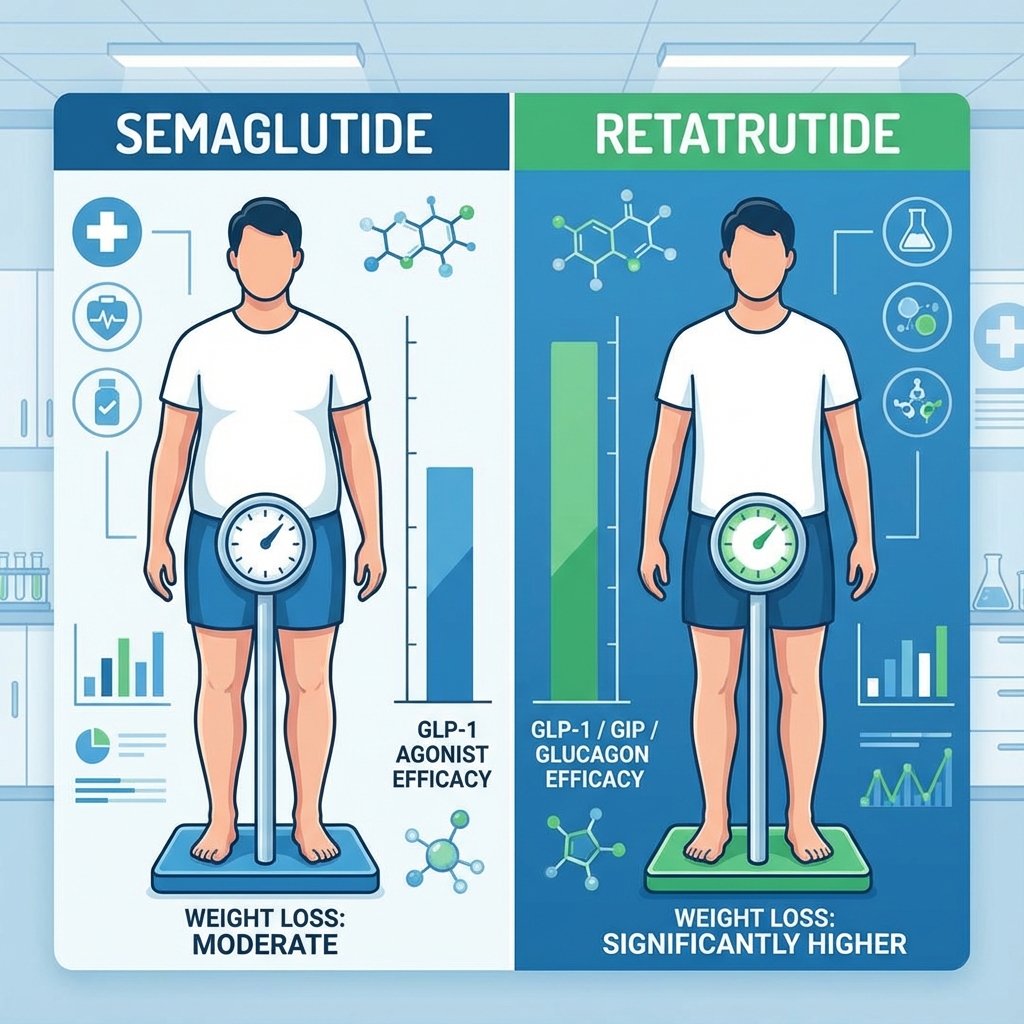
In the debate of retatrutide vs semaglutide for weight loss, understanding the comparative analysis of these treatments offers valuable insights.Both are known for their ability to induce significant weight reduction, yet they employ different mechanisms.Retatrutide acts on multiple pathways, providing a broad approach that may result in more extensive weight reduction solutions. On the other hand, semaglutide therapy targets specific pathways, focusing on improving outcomes for certain patients.Patients often experience a marked percentage change in body weight with both peptides, though the benefits might vary based on individual responses.In terms of glycemic control, both treatments show efficacy, but there are nuances in their overall effectiveness and safety profiles.Exploring Peptides recognizes the growing interest in understanding each treatment’s unique contributions to weight loss.
Retatrutide vs Semaglutide for Diabetes Management
- ** Retatrutide:** A study published in American Diabetes Association highlighted the substantial weight reduction in people with obesity or type 2 diabetes.Retatrutide, a GIP / GLP - 1 / glucagon receptor agonist, showed promising results in phase 2 clinical trial.By promoting healthy body composition retatrutide may indirectly improve glycemic control and help with type 2 diabetes.
- ** Semaglutide:** On the other hand, is well known for its role in regulating blood sugar.A 2020 study demonstrated superior glycemic control and weight loss with once - daily oral semaglutide compared to sitagliptin.The 52 - week extension showed sustained benefits and tolerability.
Clinical Trials and Studies: Retatrutide vs Semaglutide
Retatrutide and Semaglutide have each been through various clinical trials and studies, aiming to assess their effectiveness as medication solutions for weight loss.An analysis of these trials highlights different methodologies and outcomes.Across several trials, both Retatrutide and Semaglutide showcased the promising potential for significant weight loss among participants. Trial results often reported greater compliance to Retatrutide and Semaglutide regimens compared to other weight loss solutions.In the studies, participants who received the medication saw a noticeable weight reduction compared to those in the placebo group.Different methodologies employed in these trials aimed to ensure the reliability of the results, focusing on diverse participant backgrounds.Here are some of the most notable studies:
- A 2022 study, evaluated the efficacy of semaglutide in patients with overweight or obesity.Participants receiving semaglutide lost around ** 13 %** of their body weight on average over 68 weeks, compared to 3 % in the placebo group.
- Another study in the same year, compared weekly subcutaneous semaglutide with daily liraglutide for weight loss in adults without diabetes.Semaglutide showed superior weight loss outcomes.
- Phase 2 Trial evaluated the efficacy of retatrutide, a triple - hormone agonist, in adults with obesity.Participants receiving the highest dose(12 mg) experienced an average weight loss of ** 24 %** over 48 weeks, which is arguably higher compared to 13 % over 68 weeks with semaglutide.
Side Effects: Retatrutide vs Semaglutide
When evaluating the side effects of Retatrutide vs Semaglutide for weight loss, it’s crucial to note the unique side effect profile of each therapy.Participants in various studies have reported different side effects, therefore it’s hard to pinpoint exact differences when it comes to side effects.Here are the most commonly reported side effects of these two peptides:
Semaglutide Side Effects
** Common Side Effects:**
- Nausea * Vomiting * Diarrhea * Constipation * Stomach pain * Bloating * Gas * Headache * Fatigue * Dizziness ** Serious Side Effects:**
- Pancreatitis * Allergic reactions(rash, itching, swelling, severe dizziness, trouble breathing) * Thyroid tumors(medullary thyroid carcinoma) * Gallbladder disease * Kidney damage * Severe gastrointestinal issues
Retatrutide Side Effects
** Common Side Effects:**
- Nausea * Vomiting * Diarrhea * Constipation * Stomach pain * Bloating * Gas ** Serious Side Effects:**
- Increased heart rate
- Cardiac arrhythmias(including prolonged QT syndrome)
- Increase in liver enzymes(ALT)
- Cardiac arrhythmias(including prolonged QT syndrome)
According to the available data, both medications share similar gastrointestinal side effects, but retatrutide has additional cardiovascular and liver - related side effects.
Final Word
While retatrutide shows potential through recent trials, semaglutide has been a more established choice with well - documented results.The selection between these medications often depends on personal health needs, compliance, and diabetes management expectations.Though both have demonstrated efficacy, individual responses can differ. The final word on retatrutide vs semaglutide suggests that while they share some therapeutic similarities, they each provide distinct applications within the clinical landscape.Ongoing studies will likely contribute further insights into their long - term benefits and potential solutions, enhancing future weight loss management protocols.With various findings, informed decisions can lead to effective weight management strategies.
Want to start a GLP-1 now?
Retatrutide is not FDA-approved (Lilly plans to file in early 2027) and cannot be prescribed outside a trial. The GLP-1 medicines a US clinician can prescribe today are semaglutide (Wegovy, Ozempic, Wegovy pill), tirzepatide (Zepbound, Mounjaro), liraglutide and oral orforglipron (Foundayo). Our sister site CalcMyPeptide compares what each route costs: insurance or Medicare, brand-name direct, and telehealth.
CalcMyPeptide is our sister site (same publisher, Kymata Labs). Its comparisons list only telehealth providers whose affiliate programs we have joined or applied to, and it may earn a commission. GLP-1 medicines need a prescription from a licensed clinician.