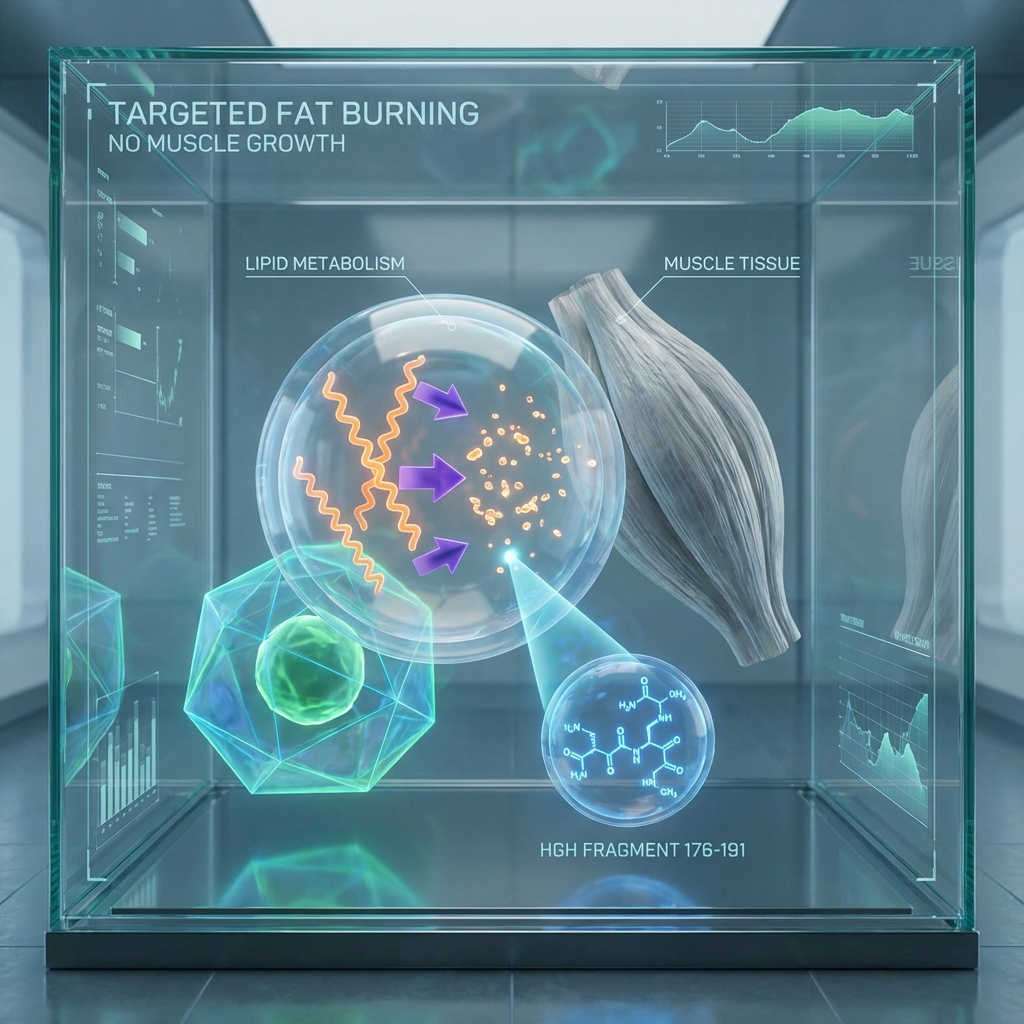
HGH Frag 176-191: Pure Fat Loss Without the Growth
Imagine the fat-burning power of HGH without the water retention or insulin issues. That is HGH Frag. Here is how it works.
Table of Contents
Key Research Insights
- HGH Frag 176-191 is a stabilized analogue of the growth hormone-releasing factor.
- It corresponds to the C-terminal amino acid residues 176-191 of the HGH molecule.
- This specific region is responsible for the lipolytic (fat-burning) activity of growth hormone.
- Crucially, it lacks the binding domain for the HGH receptor that triggers IGF-1 release, meaning it does not cause insulin resistance or bone growth.
Mechanism of Action
HGH Frag mimics the way natural growth hormone regulates fat metabolism but without the anabolic side effects.
Lipolytic Pathway
Upon administration, the fragment binds to receptors on adipocytes (fat cells). It:
- Stimulates Lipolysis: Activates the breakdown of stored triglycerides into free fatty acids and glycerol.
- Inhibits Lipogenesis: Blocks the formation of new fat deposits, particularly after meals.
Research suggests it is 12.5 times more potent than full-length HGH on a milligram-for-milligram basis at burning fat[1].
Research Findings
Studies in murine models and isolated fat cells have confirmed its ability to reduce adipose tissue mass without affecting lean body mass or blood glucose levels. Unlike AOD9604 (which is a similar fragment), HGH Frag has a shorter half-life and typically requires more frequent dosing or specific timing (fasted state).
References
[1] "Lipolytic actions of the C-terminal fragment of HGH." Endocrinology. [2] "Metabolic effects of HGH Frag 176-191." Journal of Endocrinology.