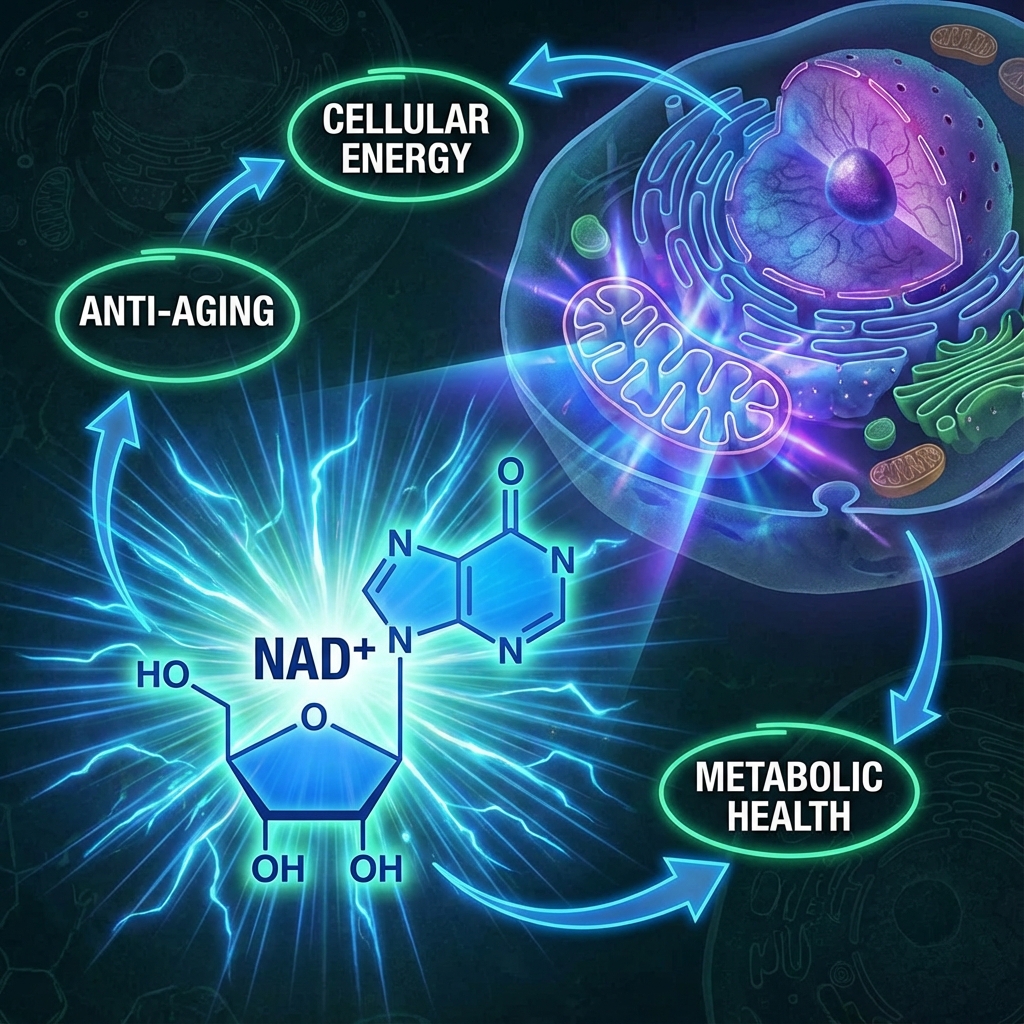
Primary Functions of NAD + in Cellular Systems
Redox Reactions and Energy Metabolism
NAD + serves as an electron carrier in metabolic processes.It accepts electrons during oxidation reactions and donates them during reduction reactions. This electron transfer is central to cellular respiration.NAD + participates in glycolysis through the glyceraldehyde - 3 - phosphate dehydrogenase reaction, enabling glucose breakdown. The TCA cycle relies on NAD + at multiple steps.Several dehydrogenase enzymes require NAD + to accept electrons, generating NADH in the process. NADH then donates electrons to Complex I of the mitochondrial respiratory chain.This drives ATP synthesis through oxidative phosphorylation. The NAD +/NADH ratio acts as a cellular redox indicator. A high ratio typically reflects healthy metabolic status, while imbalances can signal dysfunction.
Non - Redox Signaling Functions
Beyond electron transfer, NAD + functions as a substrate for several enzyme families.
Sirtuins: NAD + -Dependent Deacetylases
Sirtuins(SIRT1 - 7) consume NAD + to remove acetyl groups from target proteins.These enzymes link cellular energy status to regulatory mechanisms. Research applications examining sirtuins include:
- Metabolism and energy homeostasis regulation
- DNA repair and genome stability studies
- Oxidative stress resistance modeling
- Mitochondrial function and biogenesis research
- Inflammatory response pathway analysis SIRT1 deacetylates histones and transcription factors to regulate metabolic adaptations in model systems.Mitochondrial SIRT3 has been studied for its role in maintaining mitochondrial function.
- Mitochondrial function and biogenesis research
- Oxidative stress resistance modeling
- DNA repair and genome stability studies
PARPs: DNA Repair Enzymes
Poly(ADP - ribose) polymerases detect DNA strand breaks and coordinate repair responses.PARP1 uses NAD + to synthesize polymers of ADP - ribose. Laboratory research using PARPs examines:
- DNA damage detection and signaling
- DNA repair machinery recruitment
- Base excision repair pathways
- Double - strand break repair mechanisms
- Transcriptional regulation During extensive DNA damage, PARP activation can consume large amounts of NAD +.This creates interesting models for studying metabolic shifts.
- Double - strand break repair mechanisms
- Base excision repair pathways
- DNA repair machinery recruitment
CD38: NAD + Degrading Enzyme
CD38 is an ectoenzyme and the primary NAD + -consuming enzyme in many tissues.It hydrolyzes NAD + to produce nicotinamide and cyclic ADP - ribose. CD38 expression and activity increase with age in model organisms.Elevated CD38 drives age - related NAD + decline and links to inflammatory processes. CD38 inhibition studies have shown restoration of NAD + levels in aged animal models.