L-Carnitine Research: Energy Metabolism, Cellular Protection and More
Research overview on L-carnitine and acetyl-L-carnitine mechanisms in energy metabolism, antioxidant activity, and neuroprotection.
Table of Contents
Key Research Insights
- L - Carnitine transports long - chain fatty acids into mitochondria for beta - oxidation and ATP production - The compound acts as a mitochondrial buffer by modulating the acetyl - CoA / CoA ratio - Acetyl - L - carnitine demonstrates distinct neuroprotective properties and influences neurotransmitter synthesis - Research shows potential antioxidative effects and protection against ischemic injury in cardiac models
Energy Metabolism and Mitochondrial Function
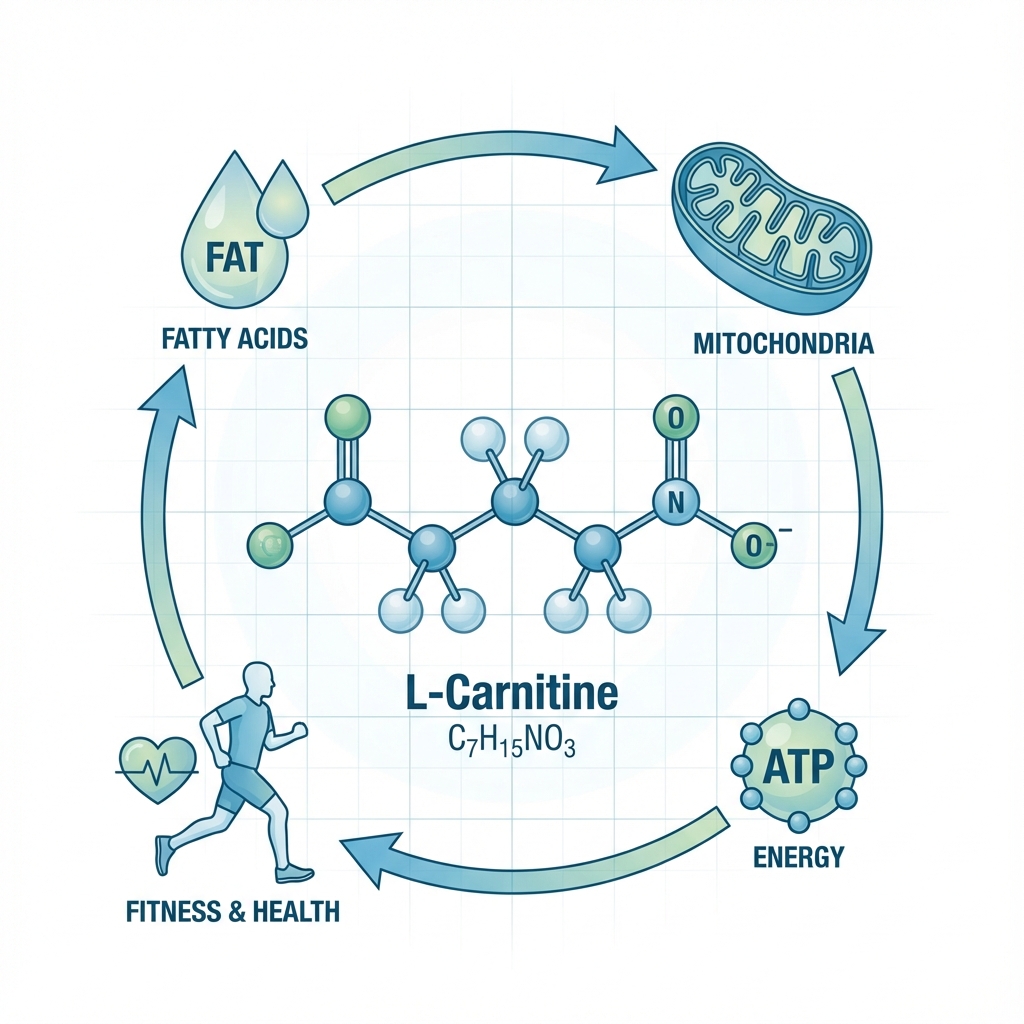
The carnitine shuttle system is the primary means whereby L - carnitine exerts its influence on cellular metabolism.It transports long - chain fatty acids across the inner mitochondrial membrane for beta - oxidation. Fatty acyl groups transfer from cytosolic CoA to carnitine via carnitine palmitoyltransferase I on the outer mitochondrial membrane.These acylcarnitines then cross the membrane and reconvert to acyl - CoA through CPT - II in the mitochondrial matrix. This transport allows fatty acid breakdown to generate acetyl - CoA, which then enters the tricarboxylic acid cycle in order to produce ATP.This system is particularly important during transitions in metabolic demand, such as from rest to activity.
Acetyl - CoA Buffering
L - carnitine also buffers the acetyl - CoA / CoA ratio within mitochondria.By accepting acetyl groups from acetyl - CoA via carnitine acetyltransferase, it forms acetylcarnitine and releases free Coenzyme A. Maintaining adequate free CoA levels is critical for the metabolic flux of the pyruvate dehydrogenase complex.This buffering action prevents the inhibition of carbohydrate metabolism during high - flux states.
Oxidative Stress and Antioxidant Properties
L - carnitine functions as an antioxidant through multiple pathways.The compound reduces lipid peroxidation by decreasing malondialdehyde(MDA) levels while increasing activity of endogenous antioxidant enzymes. These enzymes include superoxide dismutase(SOD), catalase(CAT), and glutathione peroxidase.The effects link to modulation of peroxisome proliferator - activated receptor alpha(PPAR - α), which regulates antioxidant enzyme expression. At the cellular level, L - carnitine attenuates oxidative damage to lipids, proteins, and nucleic acids.Studies across various models show the compound protects mitochondrial structures from oxidative decay. This protection preserves mitochondrial membrane potential and reduces reactive oxygen species(ROS) generation.The protective capacity extends to situations of metabolic stress, where L - carnitine helps maintain cellular redox balance.
Neurological Research
Acetyl - L - carnitine shows distinct neurological activities beyond those of L - carnitine.In brain tissue, acetyl - L - carnitine serves as both an energy substrate and a donor of acetyl groups for neurotransmitter synthesis. The compound can be metabolized to acetyl - CoA, which enters energy - producing pathways and provides acetyl groups for acetylcholine synthesis.Neuroprotective mechanisms involve multiple pathways, including modulation of glutamatergic neurotransmission through effects on metabotropic glutamate receptors. Studies suggest Acetyl - L - Carnitine influences neurotrophic factors like NGF and promotes neurite outgrowth in PC12 cells.It also protects neurons from excitotoxicity and mitochondrial toxins in experimental models.
Cardiovascular Research
In cardiac research, L - carnitine is studied for its role in myocardial metabolism during ischemia. The heart relies heavily on fatty acid oxidation.During ischemia, carnitine levels can become depleted, and accumulation of long - chain acyl - CoA esters can disrupt membranes. Supplementation in perfusion models preserves carnitine levels, reduces the accumulation of toxic intermediates, and improves post - ischemic functional recovery.It also shows anti - apoptotic effects on cardiomyocytes exposed to hypoxic stress.
Vascular Function
L - Carnitine influences vascular endothelial function. Research indicates it upregulates endothelial nitric oxide synthase(eNOS) protein expression. This leads to increased nitric oxide production, which regulates vascular tone and blood flow.The compound also reduces markers of endothelial inflammation in models of atherosclerosis.
Metabolic and Insulin Research
L - Carnitine affects insulin signaling and glucose metabolism.In skeletal muscle studies, it promotes glucose uptake and improper fatty acid oxidation. Research suggests it improves insulin sensitivity by reducing the accumulation of intracellular lipid metabolites(like diacylglycerol and ceramides) that interfere with insulin signaling cascades.This "lipotoxicity" reduction helps restore normal metabolic flexibility.