LL-37 Peptide: Inflammation, Immunity & Antimicrobial Research
LL-37 is the only human cathelicidin with broad antimicrobial activity. Discover the different research areas from inflammation to immunity.
Table of Contents
Key Research Insights
- LL - 37 is a broad - spectrum antimicrobial peptide(AMP) derived from the cathelicidin family - Research shows it modulates immune responses, recruiting leukocytes and regulating cytokine release - Studies indicate potential roles in wound healing, angiogenesis, and apoptosis regulation - The peptide binds to bacterial membranes and neutralizes lipopolysaccharides(LPS)
What is LL - 37 Peptide ?
LL - 37 is the only cathelicidin antimicrobial peptide(AMP) and part of the cathelicidin family of host defense peptides(HDP).This 37 - amino acid peptide is produced through proteolytic cleavage of human cationic antimicrobial protein 18(hCAP18) by proteinase 3. Unlike traditional antimicrobials that target specific pathogens, LL - 37 demonstrates broad - spectrum activity against bacteria, viruses, and fungi in laboratory studies.Its research applications extend beyond antimicrobial effects to include immune modulation, angiogenesis, and wound healing mechanisms. LL - 37 carries a net positive charge of + 6 and adopts an amphipathic helix structure, making it highly effective for membrane interaction studies and cellular research applications.
How LL - 37 Works
Membrane Interaction Mechanisms
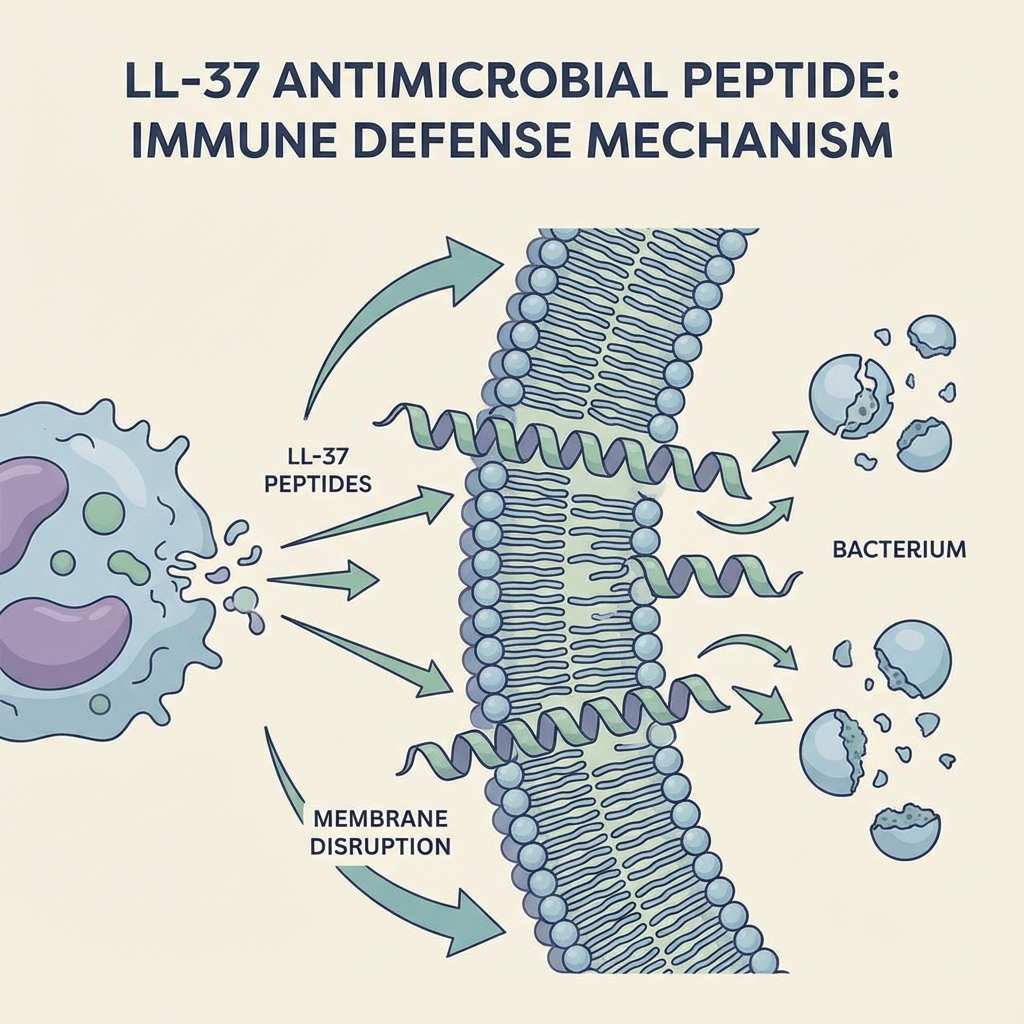
LL - 37’s biological activity stems from its unique structural properties and receptor interactions. The peptide's cationic nature allows it to interact electrostatically with negatively charged bacterial membranes. This interaction disrupts membrane integrity, leading to pore formation and cell lysis. This mechanism is distinct from antibiotics and makes resistance development less likely. In eukaryotic cells, the peptide enters through endocytosis or direct translocation.Once intracellular, it can interact with mitochondrial membranes or nuclear acids to modulate cell function.
Cellular Signaling Pathways
Aside from direct membrane effects, LL - 37 functions as a signaling molecule.It interacts with various cell surface receptors, including FPR2(Formyl Peptide Receptor 2) and P2X7. Activation of these receptors triggers downstream signaling cascades(such as MAPK / ERK) involved in cell migration, proliferation, and immune activation. The peptide also modulates TLR4 signaling, effectively dampening the pro - inflammatory response to bacterial toxins like LPS.
Research Benefits of LL - 37 Peptide
Antimicrobial peptide LL - 37 has demonstrated many promising avenues for research applications.
Antimicrobial Properties
Laboratory studies confirm LL - 37's efficacy against a wide range of pathogens, including Gram-positive and Gram-negative bacteria. It neutralizes biofilms, which are notoriously resistant to standard treatments. Its antiviral properties are also under investigation, with research showing inhibition of viral replication in certain models.
Immunity and Immune System Effects
LL - 37 acts as a chemoattractant, recruiting neutrophils, monocytes, and T cells to sites of infection.This helps coordinate the innate immune response. It regulates the production of cytokines and chemokines, balancing pro - inflammatory and anti - inflammatory signals to prevent tissue damage while clearing pathogens.
Tissue Healing and Repair Studies
Research in wound healing models indicates that LL - 37 promotes re - epithelialization and angiogenesis(blood vessel formation). It stimulates the proliferation of keratinocytes and endothelial cells, accelerating the closure of chronic wounds in experimental settings.
Cardiovascular Research
Emerging research suggests LL - 37 may play a role in atherosclerosis and vascular health.Its presence in atherosclerotic plaques and its ability to modulate endothelial cell function are areas of active investigation.
Current Research Developments
Research teams are investigating LL - 37’s role in autoimmune disease mechanisms.Current studies identify the peptide as a T - cell autoantigen in psoriasis, with two - thirds of patients harboring specific T cells. Scientists are studying post - translational modifications including citrullination and carbamylation.Research shows these modifications link to neutrophil - dominated inflammation and become targets for T - cell responses. Cancer research reveals tissue - specific effects, with LL - 37 promoting some tumor types while inhibiting others.Laboratory studies show LL - 37 exhibits anticancer effects in colon cancer, gastric cancer, hematologic malignancies, and oral squamous cell carcinoma. Neurological research is investigating LL - 37’s brain effects.Studies indicate the peptide may contribute to neurodegenerative processes through chloride intracellular channel 1 activation.