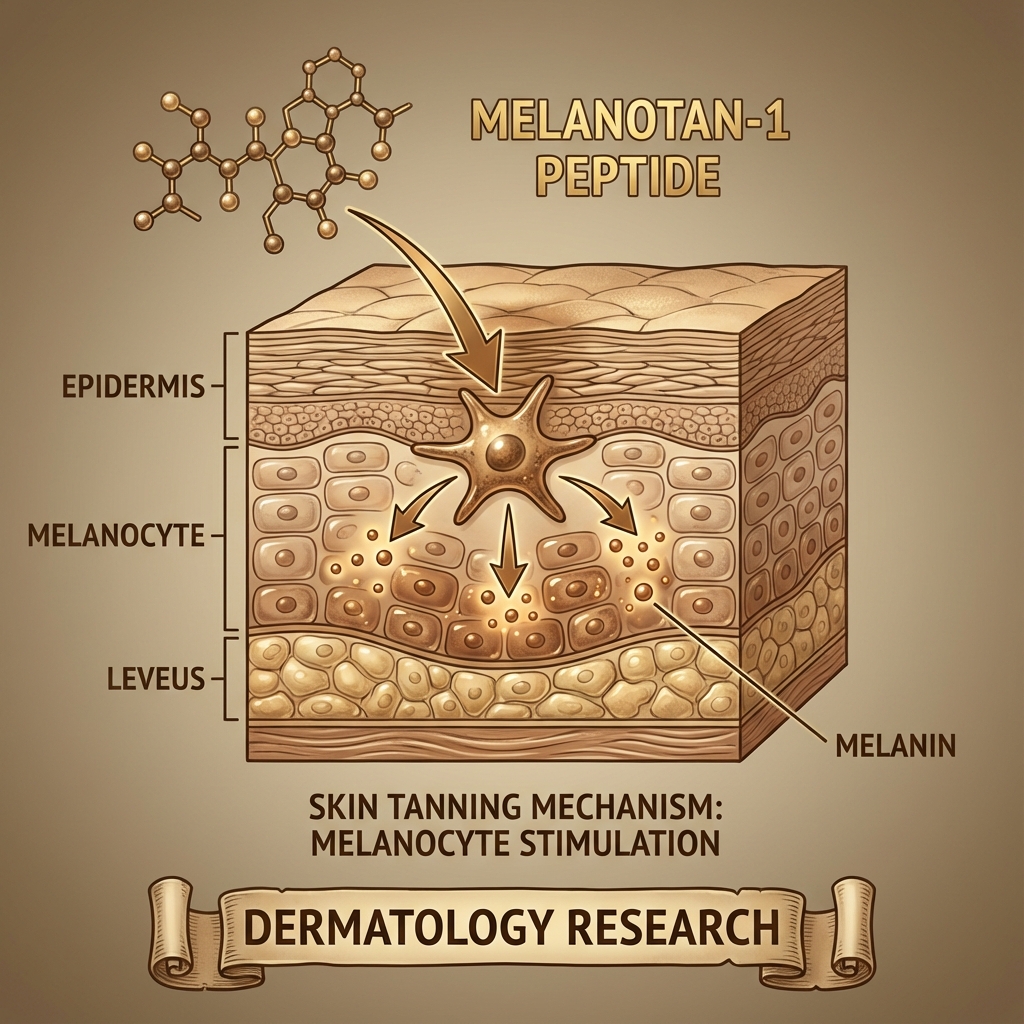
Melanotan 1 (MT-1) Peptide: Melanogenesis and Cellular Mechanisms
Melanotan 1 research on melanocortin-1 receptor activation, melanogenesis pathways, DNA repair, and photoprotection.
Table of Contents
Key Research Insights
- MT - 1 acts as a potent, non - selective agonist of melanocortin receptors(MC1R) to stimulate melanogenesis - The peptide enhances eumelanin synthesis, providing broad - spectrum photoprotection independent of UV exposure - Studies indicate MT - 1 activates DNA repair pathways(nucleotide excision repair) in skin cells - Immunomodulatory effects include suppression of pro - inflammatory cytokines and modulation of immune cell activity
Melanocortin - 1 Receptor Activation by Melanotan 1
MT - 1 binds to melanocortin - 1 receptors on target cells, initiating adenylyl cyclase stimulation and increased cyclic adenosine monophosphate production.This secondary messenger activates protein kinase A, which triggers expression of microphthalmia - associated transcription factor(MITF). The activated pathway upregulates tyrosinase and related proteins needed for melanin biosynthesis.Research shows MT - 1 shows 10 - to 100 - fold increased activity in pigmentation bioassays compared to the natural hormone(α - MSH). Receptor activation effects extend beyond pigmentation.Studies document influences on DNA repair enzyme activity, inflammatory mediator production, and various cellular protection mechanisms.
Pigmentation and Melanogenesis
Laboratory studies examining melanocyte cultures reveal MT - 1 specifically enhances eumelanin synthesis rather than pheomelanin production.Eumelanin functions as a broad - spectrum photoprotective compound, absorbing and scattering ultraviolet radiation across multiple wavelengths. Research in populations with melanocortin - 1 receptor variant alleles shows the peptide effectively increases melanin content even when receptor function is reduced.This finding suggests potential applications for studying pigmentation mechanisms. The peptide’s ability to stimulate melanogenesis without UV exposure offers unique research advantages.Laboratory models can examine melanin - related cellular processes independently of photodamage variables.
DNA Repair and Cellular Protection
Beyond pigmentation, investigations show MT - 1 activates nucleotide excision repair processes that remove UV - induced DNA lesions.This protective mechanism operates through melanocortin - 1 receptor - dependent signaling and melanin - independent pathways. Research by Dong et al.shows the peptide increases DNA repair protein activity through GTPase activation.The signaling cascade promotes nuclear translocation of repair factors, allowing damage resolution in different cell types including keratinocytes. Pretreated tissue samples exhibit reduced DNA damage levels following UV exposure compared to controls.This suggests applications for studying cellular preservation strategies and photoprotection mechanisms at the molecular level.
Anti - Inflammatory and Immunomodulatory Effects
MT - 1 modulates both innate and adaptive immune responses through melanocortin receptor activation.The compound influences cytokine production patterns and inflammatory mediator release in cultured immune cells. Laboratory models show melanocortin receptor activation reduces pro - inflammatory cytokine expression while boosting anti - inflammatory factor production.Studies examining neuroinflammatory contexts show decreased microglial activation and reduced formation of specific astrocyte populations. The peptide appears to influence immune cell behavior beyond simple inflammation suppression.Research documents effects on complement component expression and glial cell response patterns in affected tissue samples.
Neurological Research Applications
Investigations into neuroprotective mechanisms identify melanocortin receptor pathways that protect blood - brain barrier integrity and modulate inflammatory responses.Laboratory models of ischemic conditions show melanocortin activation provides lasting protection and decreases tissue damage volume. Research examining protein aggregation models reveals receptor activation reduces accumulation of pathological proteins.Studies document decreased levels of both soluble and insoluble forms in specific regions, with influences on microglial distribution patterns. Transcriptome analyses show melanocortin receptor activation affects gene expression related to microglial reactivity, cellular metabolism, protein processing, and stress response pathways.The compound shifts expression profiles toward control patterns in affected samples.