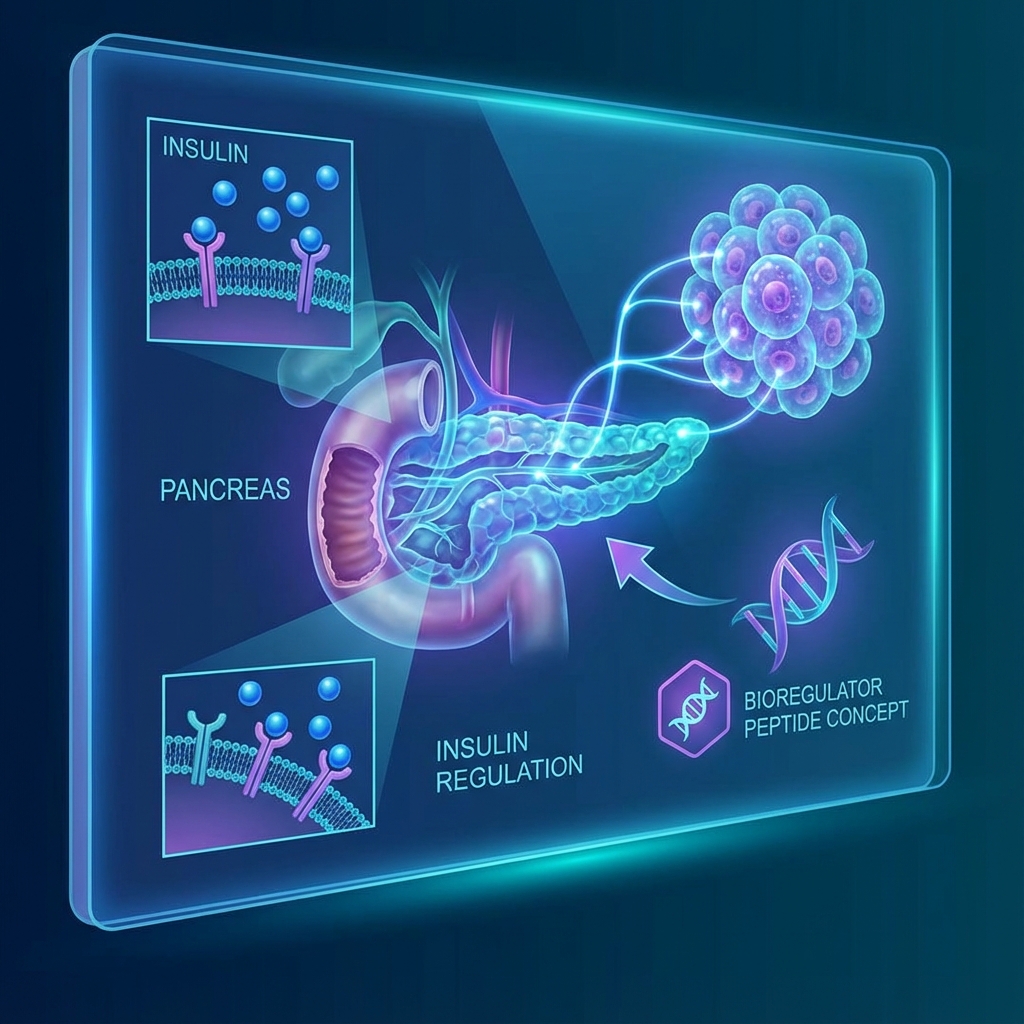
Pancragen Peptide: Epigenetic and Pancreatic Aging Research
Pancragen (KEDW) research overview covering chromatin binding, epigenetic modulation of stem cell differentiation, and pancreatic tissue studies.
Table of Contents
Highlights
- KEDW interacts directly with DNA sequences and chromatin structures to influence gene transcription in laboratory models - Research indicates the peptide binds to histone proteins, potentially modulating chromatin accessibility without altering underlying DNA sequences - Studies associate KEDW with stem cell differentiation pathways, particularly toward pancreatic lineages and metabolic regulatory pathways in in vitro settings - The peptide class demonstrates effects on cellular aging markers including SIRT1, PARP1, and PARP2 expression in experimental models
DNA and Chromatin Interaction Mechanisms
The primary mechanism attributed to KEDW involves its ability to interact directly with DNA and regulate gene expression.Short peptides in this class can penetrate into cell nuclei and nucleoli, where they interact with multiple chromatin components. These interactions encompass several key processes:
- Sequence recognition in gene promoters
- Template - directed processes including replication
- Transcription factor binding sites
- DNA repair mechanisms The peptide’s small molecular size facilitates nuclear penetration in experimental systems.This allows direct access to chromatin structures that control gene accessibility. Research on related peptides in the same bioregulator class has demonstrated specific binding patterns.The KE dipeptide(lysine - glutamic acid, which forms the first two amino acids of KEDW) has been shown to interact with specific DNA sequences including GCGG and GGGC motifs found in gene promoters. While direct evidence for KEDW’s specific DNA binding sequences remains limited in published literature, the structural similarity suggests comparable mechanisms may be operative.Understanding the effects of Pancragen on gene promoter regions represents an ongoing area of investigation in laboratory research.
- Transcription factor binding sites
- Template - directed processes including replication
Histone Protein Binding and Epigenetic Modulation
Studies on analogous tetrapeptides indicate these molecules can bind to histone proteins, particularly H1 histones and core histones H3 and H6. The AEDG peptide(Ala - Glu - Asp - Gly), which shares structural characteristics with KEDW, has been demonstrated to preferentially bind with H1 histones at specific sites that interact with DNA.This binding may represent one mechanism through which KEDW could influence chromatin structure and gene transcription. Histone - peptide interactions can alter the accessibility of DNA to transcriptional machinery without changing the genetic code itself.Peptides in this bioregulator class have been associated with epigenetic regulation mechanisms. Short peptides can influence DNA methylation status, which represents an epigenetic mechanism for gene activation or repression.By modulating chromatin accessibility and histone - DNA interactions, Pancragen may affect which genes are accessible for transcription. This occurs under both normal physiological conditions and in states of cellular stress or senescence in laboratory models.Researchers use Pancragen in epigenetic studies to examine how small peptides interact with chromatin structures.
Stem Cell Differentiation and Pancreatic Development
KEDW has been identified in scientific literature as having a role in modulating stem cell differentiation, with specific mention of its involvement in directing differentiation into pancreatic lineages. The peptide is discussed alongside other bioregulatory molecules for its potential to influence stem cell fate decisions toward pancreatic tissue formation.These differentiation pathways include:
- Neuronal cell lineages
- Glial cell types
- Myocardial cells
- Osteogenic differentiation
- Hepatocyte development
- Pancreatic cell types and pancreas - related tissues The mechanisms underlying these differentiation effects likely involve the peptide’s influence on gene expression programs that govern cell fate specification.Research on stem cell differentiation toward pancreatic cell types involves complex transcriptional networks that regulate pancreatic function at the developmental level. Peptide bioregulators in this class have been observed to stimulate cell proliferation and differentiation processes.The molecular basis appears to involve both the peptides’ direct interactions with chromatin and their potential effects on cellular signaling cascades. Studies examining the effects of Pancragen on pancreatic lineage markers provide insight into how tetrapeptides may influence tissue - specific development pathways in laboratory settings.
- Hepatocyte development
- Osteogenic differentiation
- Myocardial cells
- Glial cell types
Gene Expression and Metabolic Regulation
The core effect of short peptides like KEDW centers on their capacity to regulate gene expression and subsequent protein synthesis. By interacting with DNA sequences in gene promoters and with histone proteins that package DNA, these peptides may alter the accessibility of specific genes.This regulatory capacity extends across multiple cellular systems and has been documented in cell types from plants to humans. The regulation of gene expression by these peptides appears to occur through multiple coordinated mechanisms:
- Direct DNA sequence recognition
- Modulation of chromatin structure through histone interactions
- Potential influence on DNA methylation patterns
- Effects on transcription factor binding Each mechanism contributes to the overall effect on gene transcription in experimental systems.Bioregulatory peptides in this class have been associated with the restoration and maintenance of tissue functions in research models. The peptides may contribute to cellular homeostasis by helping maintain appropriate gene expression profiles within specific tissue types.Research interest includes examining how Pancragen may influence genes related to metabolic processes, including those involved in glucose metabolism and insulin signaling pathways. This tissue - specific effect likely relates to the peptides’ ability to interact with particular DNA sequences found in metabolic regulatory genes.
- Potential influence on DNA methylation patterns
- Modulation of chromatin structure through histone interactions
Immunomodulatory Properties of Pancragen Peptide
Peptides in the bioregulator class have demonstrated immunomodulatory properties in laboratory research. While specific immune effects of KEDW have not been extensively detailed in available literature, the general mechanism appears to involve modulation of gene expression in immune cells.This potentially affects:
- Cytokine production pathways
- Immune cell differentiation programs
- Inflammatory response regulation
- Immune cell activation states The small size of these peptides allows them to penetrate immune cells and access nuclear compartments where immune - related genes are regulated. Research in this area would benefit from more specific studies examining KEDW’s effects on particular immune cell populations.This includes T cells, B cells, macrophages, and dendritic cells in controlled in vitro systems. Researchers who use Pancragen in immunological studies often focus on gene expression changes rather than downstream functional outcomes in isolated cell populations.
- Inflammatory response regulation
- Immune cell differentiation programs
Apoptosis and Cellular Aging Mechanisms
Short peptides in this bioregulator class have been noted to influence apoptotic processes. The mechanism appears to involve modulation of genes encoding proteins in cell death and survival pathways.Related peptides such as EDR (Glu - Asp - Arg) have been shown to reduce apoptosis intensity in cell types. This potentially occurs through effects on genes encoding:
- Caspase family proteins
- p53 tumor suppressor
- BCL - 2 family members
- Other apoptosis - regulatory proteins Peptide bioregulators have been studied in the context of cellular aging, with effects on gene expression during replicative senescence.The KE peptide, which comprises part of the KEDW sequence, has been shown to regulate expression of genes involved in cellular aging processes. These include SIRT1, PARP1, and PARP2.These effects on aging - related genes appear to occur through the peptides’ interactions with specific DNA sequences in the promoters of these genes. Research examining metabolic disorders in elderly populations has generated interest in how peptide bioregulators might influence age - related gene expression patterns in laboratory models.The effects of Pancragen on longevity - associated genes represent an active area of investigation.
- BCL - 2 family members
- p53 tumor suppressor
Methodological Considerations in Peptide Research
The available research on KEDW specifically is limited compared to the broader literature on peptide bioregulators as a class. Much of the mechanistic understanding derives from studies on structurally related peptides or on the general properties of short bioactive peptides.The lack of extensive peptide - specific experimental data in publicly accessible literature means that while general mechanisms can be described, specific molecular targets require further investigation. This includes binding affinities, concentration - response relationships, and comprehensive pathway analyses for KEDW.The study of these short peptides presents unique challenges:
- Small size complicates detection
- Potential for rapid degradation
- Need for specialized tracking techniques
- Requirements for sensitive analytical methods Advances in peptide chemistry, cellular imaging, and genomic analysis techniques may facilitate more detailed characterization of KEDW - specific mechanisms.Future research could employ techniques such as chromatin immunoprecipitation sequencing, RNA sequencing, and advanced mass spectrometry. Laboratories that use Pancragen in mechanistic studies typically implement multiple analytical approaches to verify peptide localization and activity within cellular compartments.
- Need for specialized tracking techniques
- Potential for rapid degradation
Research Implementation Considerations
KEDW is a research compound meant for laboratory use only.It is not intended for human consumption or medical purposes. All studies should take place in controlled in vitro or ex vivo environments with the proper oversight from institutions.Researchers using peptide bioregulators need to set up concentration-response relationships that fit their specific experimental models. Choosing cell lines, setting culture conditions, and determining exposure times all affect the outcomes observed.When labs use Pancragen in their research, it is essential to establish a baseline characterization of the peptide batch. Verifying peptide identity and purity before experiments is crucial for ensuring reproducibility in research.Independent testing from certified labs offers a reliable confirmation of quality, going beyond what the manufacturer specifies.
Advancing Peptide Bioregulator Research
The growing body of research on short bioactive peptides like KEDW points to complex interactions between these molecules and cellular regulatory systems. While general mechanisms involving DNA binding, histone interaction, and gene expression modulation have been characterized, peptide - specific effects require continued investigation.Future research directions include:
- Mapping specific genomic binding sites for KEDW
- Characterizing tissue - specific effects in different cell types, particularly pancreatic tissue
- Elucidating complete signaling pathways activated by the peptide
- Defining structure - activity relationships for tetrapeptides
- Examining how Pancragen may influence metabolic regulatory networks Advanced analytical techniques will help researchers better understand how tetrapeptide structure relates to biological activity.Studies on the effects of Pancragen across different cellular contexts will clarify whether observed mechanisms are universal or tissue - specific.
- Defining structure - activity relationships for tetrapeptides
- Elucidating complete signaling pathways activated by the peptide
- Characterizing tissue - specific effects in different cell types, particularly pancreatic tissue