Introduction to Peptide Purification Techniques
Learn essential peptide purification process techniques including RPC, ion exchange, and HILIC methods for research labs and suppliers.
Table of Contents
Why Peptide Purification Matters
Synthetic peptides often contain impurities from the peptide manufacturing process.These can include incomplete sequences, side reaction products, and leftover chemicals from synthesis.Even small amounts of these contaminants can interfere with your research results. Pure peptides provide consistent, reliable data across experiments.They also ensure that your biological assays accurately reflect the peptide’s true activity without interference from unwanted compounds.
The Purification Process Challenge
Purifying peptides presents unique difficulties compared to other molecules.The main challenge comes from closely related impurities that are very similar to your target peptide. For example, deletion sequences differ by just one amino acid.Traditional separation methods often struggle to tell these apart.These synthesis - related impurities are particularly common when using solid-phase peptide synthesis techniques, where incomplete coupling reactions can create multiple peptide variants. Some peptides also have poor solubility in common solvents, making them difficult to purify without significant losses.
Reversed - Phase Chromatography: The Gold Standard
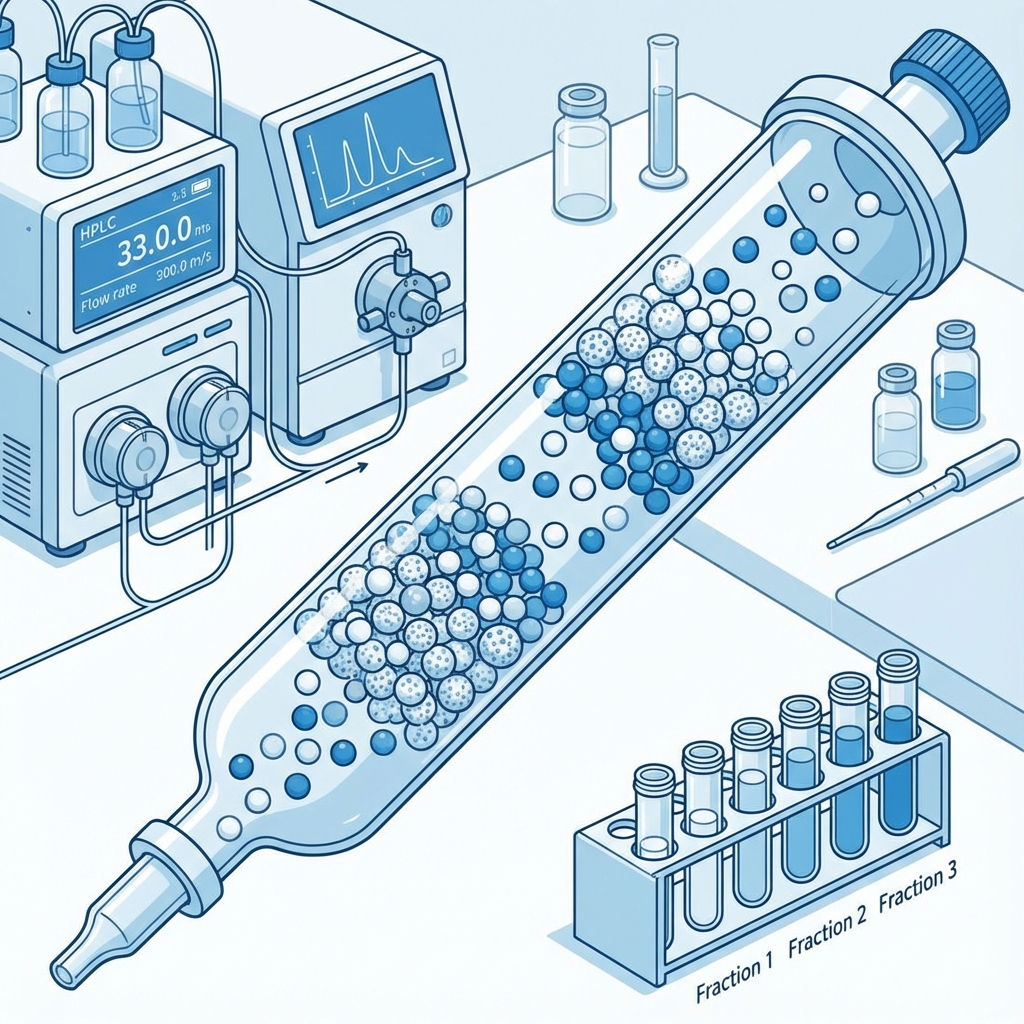
Reversed - phase chromatography remains the most popular method for purification of peptides.This technique separates peptides based on how they interact with hydrophobic(water - repelling) surfaces. The process uses a column packed with C18 - bonded silica and mobile phases containing water, acetonitrile, and trifluoroacetic acid.Peptides stick to the column differently based on their hydrophobic properties and elute at different times.
Ion - Exchange Chromatography: Charge - Based Separation
Ion exchange chromatography offers a completely different approach by separating peptides based on their electrical charge rather than hydrophobic properties.This makes it an excellent complement to reversed - phase methods. The technique works by using charged stationary phases that attract peptides with opposite charges.Cation exchange captures positively charged peptides, while anion exchange binds negatively charged ones.
Size Exclusion Chromatography: Gentle and Effective
Size exclusion chromatography separates peptides based on molecular size rather than chemical interactions.This gentle method preserves peptide structure and completely avoids organic solvents. The separation works through a porous stationary phase.Larger molecules can’t enter the pores and elute first, while smaller molecules penetrate the pores and come out later.
Advanced Techniques for Challenging Peptides
HILIC: For Polar Peptides
Hydrophilic Interaction Liquid Chromatography(HILIC) provides complementary selectivity to reversed - phase methods.It’s particularly valuable for polar and hydrophilic peptides that don’t retain well on traditional C18 columns. HILIC uses hydrophilic stationary phases with high organic mobile phases, creating unique retention patterns.The technique excels at phosphopeptide enrichment and histone modification analysis.
Mixed - Mode Chromatography
Mixed - mode systems combine multiple interaction mechanisms in a single column.These might include ion exchange, hydrophobic interaction, and hydrogen bonding all working together. This approach can resolve difficult separations that single - mode methods cannot handle.It also offers better salt tolerance and can reduce the total number of purification steps needed.
Specialized Solutions for Hydrophobic Peptides
Highly hydrophobic peptides present unique challenges due to poor solubility in standard chromatographic solvents.Traditional approaches often fail completely with these difficult peptide sequences. Specialized strategies include hydrophilic tagging, where solubilizing sequences are attached during synthesis and removed afterward.Alternative precipitation - based methods exploit the low solubility characteristics to achieve separation.