Peptide Quality Control: Methods, Standards and Best Practices
Complete guide to peptide quality control methods, standards and best practices for research labs. Learn HPLC, MS testing and purity requirements.
Table of Contents
Regulatory Standards That Guide Quality Control
International Guidelines
The foundation of peptide quality control rests on established international standards.The ICH Q6B guideline provides the main framework for testing biotechnological products, including synthetic peptides.This guideline covers identity verification, purity assessment, and strength testing. The European Medicines Agency(EMA) recently published new guidelines specifically for synthetic peptides in 2022. These standards address the unique challenges peptides present compared to traditional pharmaceuticals.
Good Manufacturing Practice(GMP) Standards
GMP standards create the operational framework for peptide production.These requirements cover: - Controlled manufacturing environments - Clean rooms with regulated air quality - Proper documentation practices - Quality assurance systems GMP ensures the manufacturing process remains consistent and traceable from raw materials to final product testing.
Essential Analytical Methods
High - Performance Liquid Chromatography(HPLC)
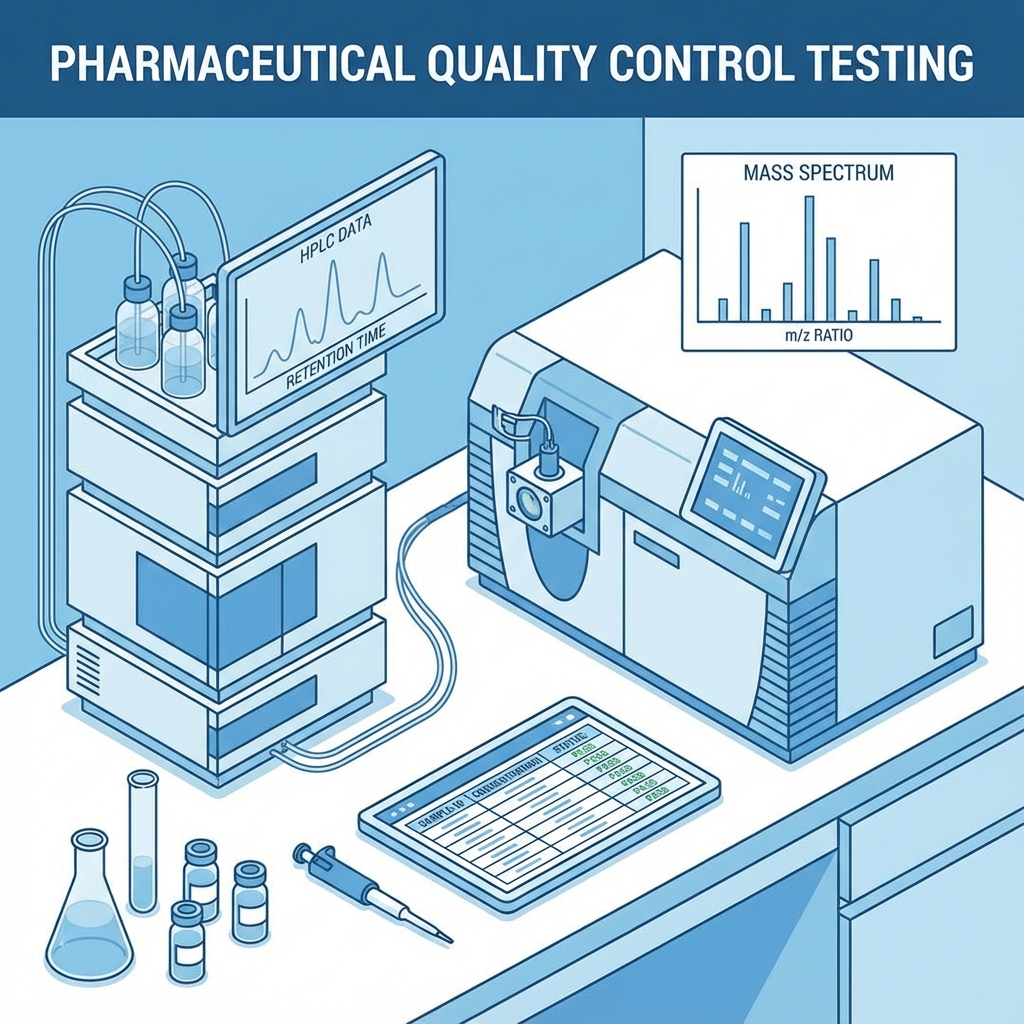
HPLC serves as the workhorse of peptide quality management.This method separates peptides from impurities and measures purity levels.Reversed - phase HPLC monitors peptide bonds at 214 nm wavelength, providing accurate purity measurements.
Mass Spectrometry(MS)
Mass spectrometry confirms molecular weight and verifies peptide sequence.Two main techniques dominate peptide analysis:
- MALDI - TOF MS: Provides accurate molecular weight determination
- ESI - MS: Offers detailed fragmentation analysis Tandem mass spectrometry(MS / MS) enables sequence confirmation and detects modifications like phosphorylation or acetylation.Advanced techniques can quantify even trace - level impurities with high precision.
Amino Acid Analysis
This technique breaks down peptides completely and measures individual amino acids.It provides quantitative content determination and verifies composition.Chiral analysis ensures all amino acids maintain proper stereochemical configuration.
Nuclear Magnetic Resonance(NMR) Spectroscopy
NMR provides the most comprehensive structural information available.While expensive and technically demanding, it can establish peptide identity, composition, sequence, and stereochemistry in a single analysis.
Key Quality Control Tests
Identity Verification
Multiple techniques work together to confirm peptide identity:
- Mass spectrometry for molecular weight confirmation
- Peptide mapping for sequence verification
- High - resolution MS for structural integrity
- Amino acid analysis for composition
- High - resolution MS for structural integrity
- Peptide mapping for sequence verification
Purity Assessment
Purity requirements vary based on intended research applications:
- > 98 %: Required for clinical trials and sensitive biological assays
- > 95 %: Standard for most biological research and immunological studies
- > 90 %: Acceptable for initial screening and non - quantitative work HPLC analysis calculates peptide purity by comparing the target peptide peak area to total peak areas in the chromatogram.
- > 95 %: Standard for most biological research and immunological studies
Content Determination
Accurate quantification requires multiple approaches to determine net peptide content:
- CHN Analysis: Measures carbon, hydrogen, and nitrogen content
- Water Content: Ensures batch consistency
- TFA Content: Important for peptides synthesized with trifluoroacetic acid
- Water Content: Ensures batch consistency
Specialized Impurity Testing
Research peptides require testing for various contaminants: - Endotoxin levels(critical for cell culture work) - Residual solvents from synthesis - Enantiomeric purity verification - Bioburden assessment