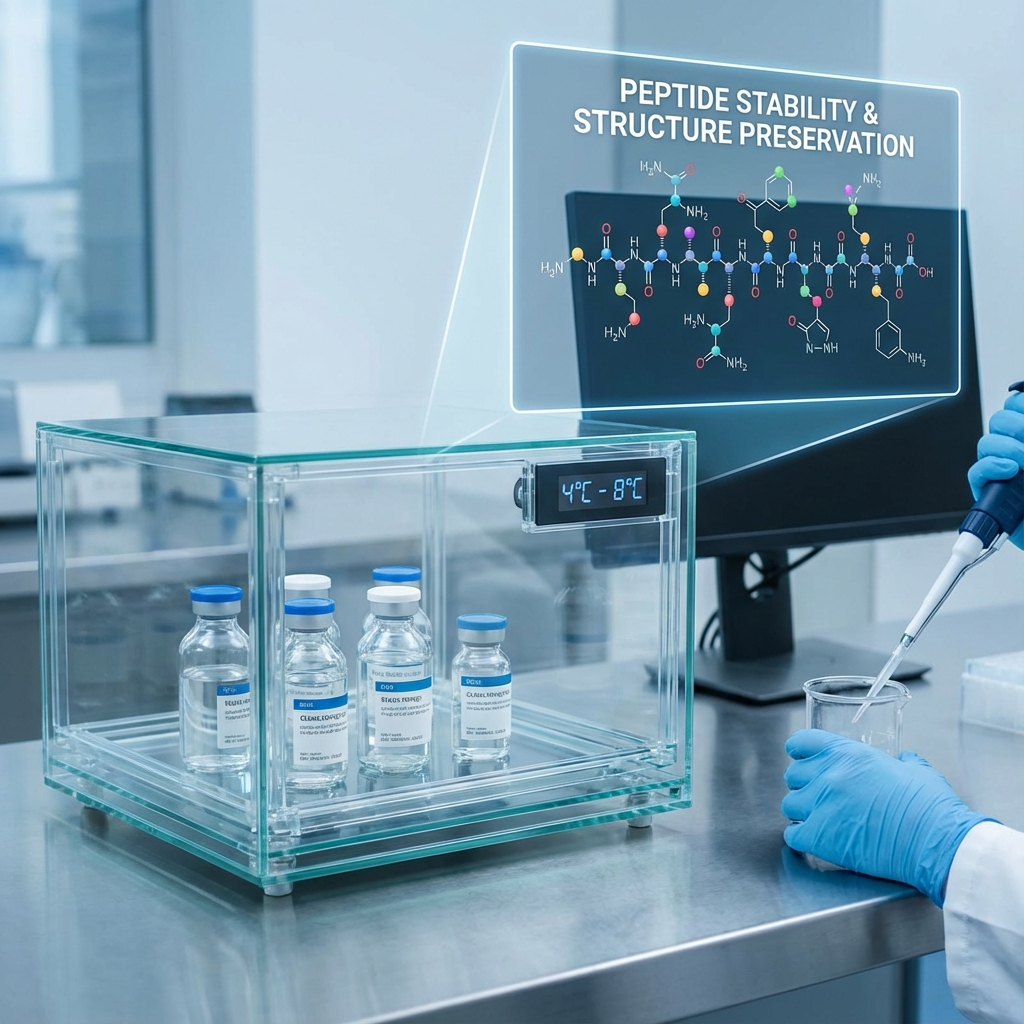
Peptide Stability: Guidelines and SOPs for Handling and Storage
Complete peptide handling and storage guidelines for researchers. Discover proven SOPs to maintain peptide integrity for reliable research results.
Table of Contents
Key Factors for Stability and Storage
Environmental Threats to Peptide Integrity
Four main environmental factors can damage your peptides:
- ** Temperature fluctuations ** accelerate chemical reactions
- ** pH extremes ** promote hydrolysis and other degradation
- ** Light exposure ** causes photodegradation of sensitive residues(esp.Trp, Tyr, Met)
- ** Oxygen contact ** triggers oxidation reactions(esp.Cys, Met)
- ** Light exposure ** causes photodegradation of sensitive residues(esp.Trp, Tyr, Met)
- ** pH extremes ** promote hydrolysis and other degradation
Vulnerable Amino Acid Residues
Certain amino acids act like weak links in your peptide chain.Blocking or modifying these residues can sometimes improve stability, but knowing which are vulnerable helps you predict stability and choose appropriate storage conditions.
Storage Guidelines for Maximum Stability
Lyophilized Peptide Storage
Freeze - dried peptides offer the best stability when stored correctly and are ideal for long - term stability requirements.Follow these temperature guidelines based on your storage needs: Pro Tips for Lyophilized Storage: - Always let containers reach room temperature before opening (prevents condensation)
- Store in tightly sealed containers to prevent moisture absorption
- Keep away from bright light sources
- For oxidation - prone peptides, purge containers with nitrogen gas before sealing
- Keep away from bright light sources
Storage Guidelines for Peptides in Solution
Peptide solutions are much less stable than lyophilized forms, making proper handling of peptides in solution critical for research success.Use these strategies to maximize solution shelf life:
- Use immediately when possible for best results
- Create single - use aliquots to avoid repeated freeze - thaw cycles
- Store at - 20°C or - 80°C for extended periods
- Buffer at pH 5 - 6 for general stability(unless specific solubility requires otherwise)
- Filter through 0.2 μm to remove bacterial contamination ** Expected Solution Shelf Life:** - 1 - 2 weeks at 4°C - 3 - 4 months at - 20°C - Approximately 1 year at - 80°C
- Buffer at pH 5 - 6 for general stability(unless specific solubility requires otherwise)
- Store at - 20°C or - 80°C for extended periods
- Create single - use aliquots to avoid repeated freeze - thaw cycles
Proper Peptide Handling and Solubilization
Safety First
Working with peptides requires basic safety precautions to protect both you and your samples:
- Work in ventilated fume hoods when using solvents
- Wear gloves, lab coat, and eye protection
- Check Safety Data Sheets before handling new reagents
- Use dedicated equipment for sensitive materials
- Check Safety Data Sheets before handling new reagents
Smart Solubilization Strategies
The right solubilization approach depends on your peptide’s charge properties and overall peptide solubility characteristics.Start with small test amounts. ** For Acidic Peptides(net negative charge):** 1. Try distilled water first 2. If insoluble, add dilute ammonium hydroxide or ammonium bicarbonate ** For Basic Peptides(net positive charge):** 1. Try distilled water first 2. If insoluble, add dilute acetic acid ** For Neutral or Hydrophobic Peptides:** 1. Use organic solvents like DMSO or DMF to dissolve peptides effectively 2. Dilute slowly into aqueous buffer with gentle mixing 3. Consider sonication or gentle warming(max 40°C)
Avoiding Common Solubilization Mistakes
- ** Never use DMSO ** with cysteine or methionine - containing peptides if oxidation is a concern(unless degassed)
    - Dissolve completely in initial solvent before diluting
        - Use glass containers for hydrophobic peptides(plastic can absorb peptides)
            - Test small amounts first to determine optimal conditions