Peptide Synthesis: How Peptides Are Made and Manufactured
Complete guide to peptide synthesis methods including SPPS, LPPS, and CEPS. Learn how peptides are manufactured for research applications.
Table of Contents
The Science Behind How Peptides Are Made
Understanding Peptide Bond Formation
The foundation of peptide synthesis lies in creating peptide bonds.These are chemical connections that link one amino acid to another.During synthesis, the carboxyl group of one amino acid connects to the amino group of another amino acid. This process requires careful control because amino acids have reactive groups that can interfere with bond formation.Scientists use protecting groups to temporarily block these reactive sites during synthesis.
Chemical Synthesis Challenges
Creating peptides involves several technical challenges:
- ** Sequence accuracy **: Each amino acid must be added in the correct order
- ** Side reactions **: Unwanted chemical reactions can create impurities
- ** Purification **: Separating the desired peptide from byproducts Modern chemical synthesis methods have developed solutions for these challenges through improved reagents and techniques.
- ** Side reactions **: Unwanted chemical reactions can create impurities
Major Peptide Synthesis Methods
Solid - Phase Peptide Synthesis(SPPS)
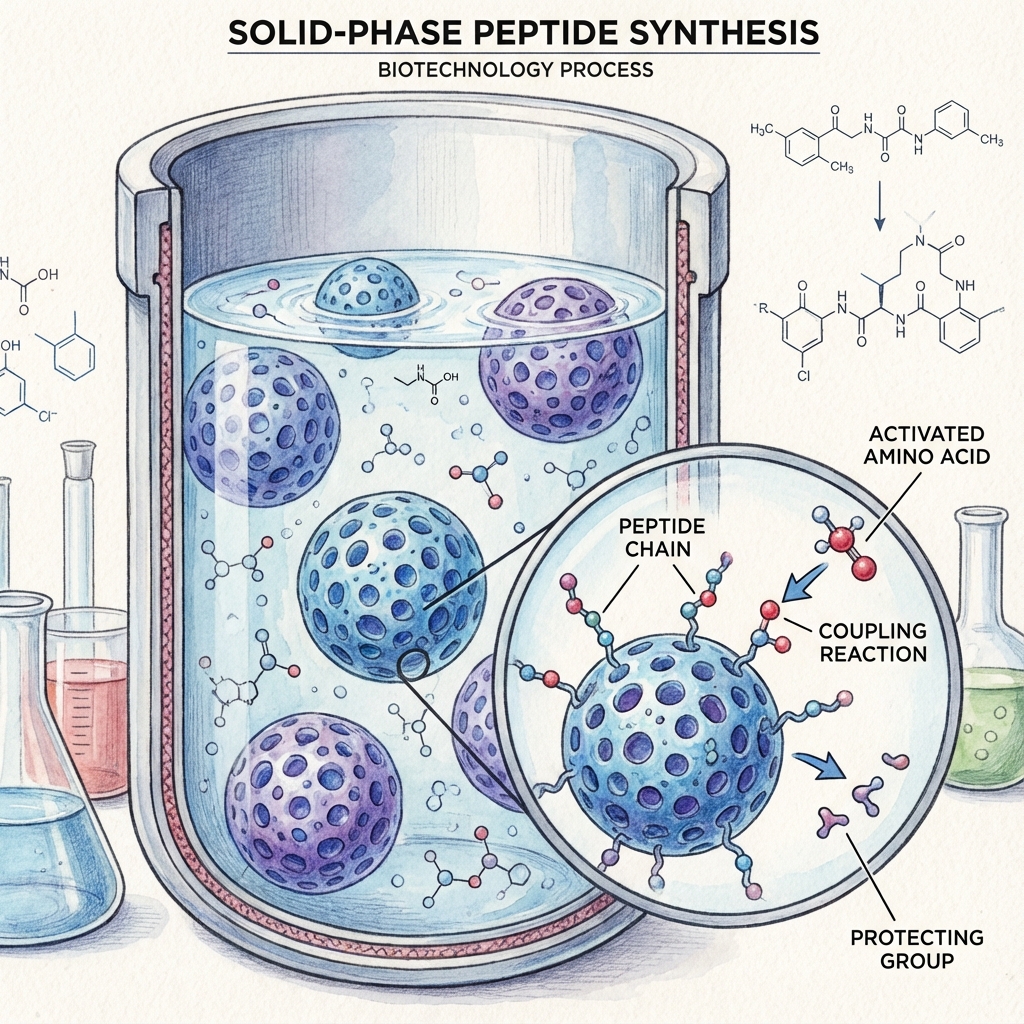
Solid - phase peptide synthesis represents the most popular method for creating peptides today.In this approach, scientists attach the growing peptide chain to a solid support material, typically tiny plastic beads. The process works like this:
- Attach the first amino acid to the solid support
- Add each new amino acid one by one
- Use excess reagents to drive reactions to completion
- Wash away unreacted materials between steps SPPS benefits include:
- High reliability and reproducibility
- Suitable for automated systems
- Excellent for short peptides up to 80 amino acids
- No need for intermediate purifications However, solid - phase synthesis does have limitations.The method requires large amounts of solvents and reagents, creating environmental concerns for large - scale production.
- Excellent for short peptides up to 80 amino acids
- Suitable for automated systems
Liquid - Phase Peptide Synthesis(LPPS)
Liquid - phase synthesis offers an alternative approach where peptides are built in solution rather than on solid supports.This method uses special soluble tags that help isolate and purify the growing peptide chain. Key advantages of LPPS:
- Reduced solvent consumption compared to SPPS
- Direct monitoring of reactions possible
- More sustainable for certain applications
- Better suited for large - scale manufacturing LPPS works particularly well for shorter peptides and offers improved environmental performance compared to traditional solid - phase methods.
- More sustainable for certain applications
- Direct monitoring of reactions possible
Advanced Methods for Complex Peptides
Chemo - Enzymatic Peptide Synthesis(CEPS)
Chemo - enzymatic peptide synthesis combines chemical and biological approaches.This method uses enzymes to form peptide bonds under mild conditions, avoiding harsh chemicals needed in traditional synthesis. CEPS excels at creating longer peptides that would be difficult to synthesize using purely chemical methods.The process produces less waste and operates under environmentally friendly conditions.
Native Chemical Ligation (NCL)
Native chemical ligation enables scientists to join peptide fragments together to create longer sequences.This method works by connecting peptide pieces through a two - step chemical reaction that forms natural peptide bonds. NCL is particularly valuable for creating peptides between 30 - 150 amino acids long, filling a gap between short peptide synthesis and full protein production.
Peptide Manufacturing Considerations
Scale - Up Challenges
Moving from laboratory - scale synthesis to industrial peptide manufacturing presents unique challenges.Manufacturers must consider:
- Reaction kinetics at larger scales
- Heat and mass transfer limitations
- Equipment design requirements
- Quality control systems The synthesis of peptides for research applications requires different considerations than pharmaceutical manufacturing, but both demand consistent quality and purity.
- Equipment design requirements
- Heat and mass transfer limitations
Custom Peptide Synthesis Services
Many research labs rely on custom peptide synthesis services rather than producing peptides in -house.These services offer:
- Specialized expertise and equipment
- Access to advanced synthesis methods
- Quality assurance and analytical testing
- Cost - effective production for research quantities When selecting a synthesis provider, researchers should consider factors like turnaround time, purity levels, and the provider’s experience with specific peptide sequences.
- Quality assurance and analytical testing
- Access to advanced synthesis methods