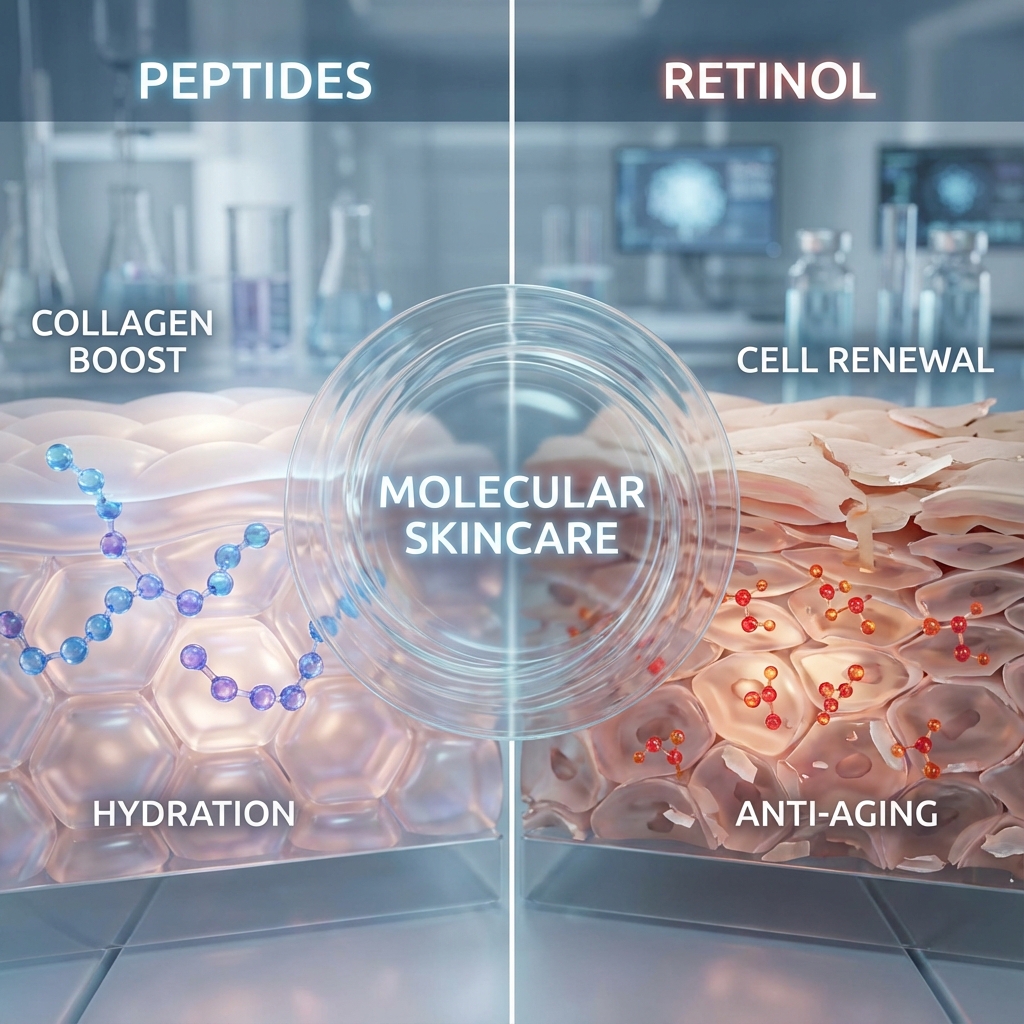
Peptides vs. Retinol: Which is Best for Your Skin?
The ultimate skincare showdown. Retinol is the gold standard for turnover, but Peptides build structure. Can you use both? (Yes, you should).
Table of Contents
Introduction
The skincare world is dominated by two powerhouses: Peptides (like GHK-Cu) and Retinoids (Retinol, Tretinoin). Understanding their distinct mechanisms of action is key to building an effective anti-aging protocol. They are not mutually exclusive; in fact, they act synergistically.
Retinol: The Turnover King
Retinoids are Vitamin A derivatives.
Mechanism
- Cell Turnover: Retinol accelerates the shedding of dead skin cells and the generation of new keratinocytes. This physically resurfaces the skin.
- Gene Expression: It binds to retinoic acid receptors (RAR) in the nucleus, directly telling the cell to produce more collagen.
Pros and Cons
- Pros: Unmatched evidence base, highly effective for acne and texture.
- Cons: Highly irritating. Causes dryness, peeling, and sun sensitivity. Can damage the moisture barrier if overused.
Peptides: The Builders
Peptides like GHK-Cu function as signal molecules.
Mechanism
- Signaling: They trick the skin into thinking there is an injury, triggering a repair response (wound healing cascade).
- Architecture: They promote the synthesis of not just collagen, but elastin, glycosaminoglycans, and proteoglycans—the "scaffolding" of the skin.
Pros and Cons
- Pros: No irritation. Soothing. Anti-inflammatory. strengthens the skin barrier.
- Cons: Effects are more subtle and take longer to manifest than the rapid resurfacing of retinoids.
The Synergistic Protocol
Research suggests the best approach is to use both.
- AM: Copper Peptides (GHK-Cu). Their anti-inflammatory and antioxidant properties protect against daily damage while building structure.
- PM: Retinol/Tretinoin. Maximal turnover and collagen stimulation while you sleep.
Warning: Do not mix strong acids (L-Ascorbic Acid/Vitamin C) or Tretinoin directly in the same layer as Copper Peptides, as the acid can break down the peptide bonds or cause potential reaction with the copper ion.