PP405: The Non-Hormonal Hair Regrowth Breakthrough
Forget DHT blockers. PP405 works by forcing stem cells into "hyper-drive" metabolism. Is this the future of baldness treatment?
Table of Contents
What is PP405? (The Non-Hormonal Shift)
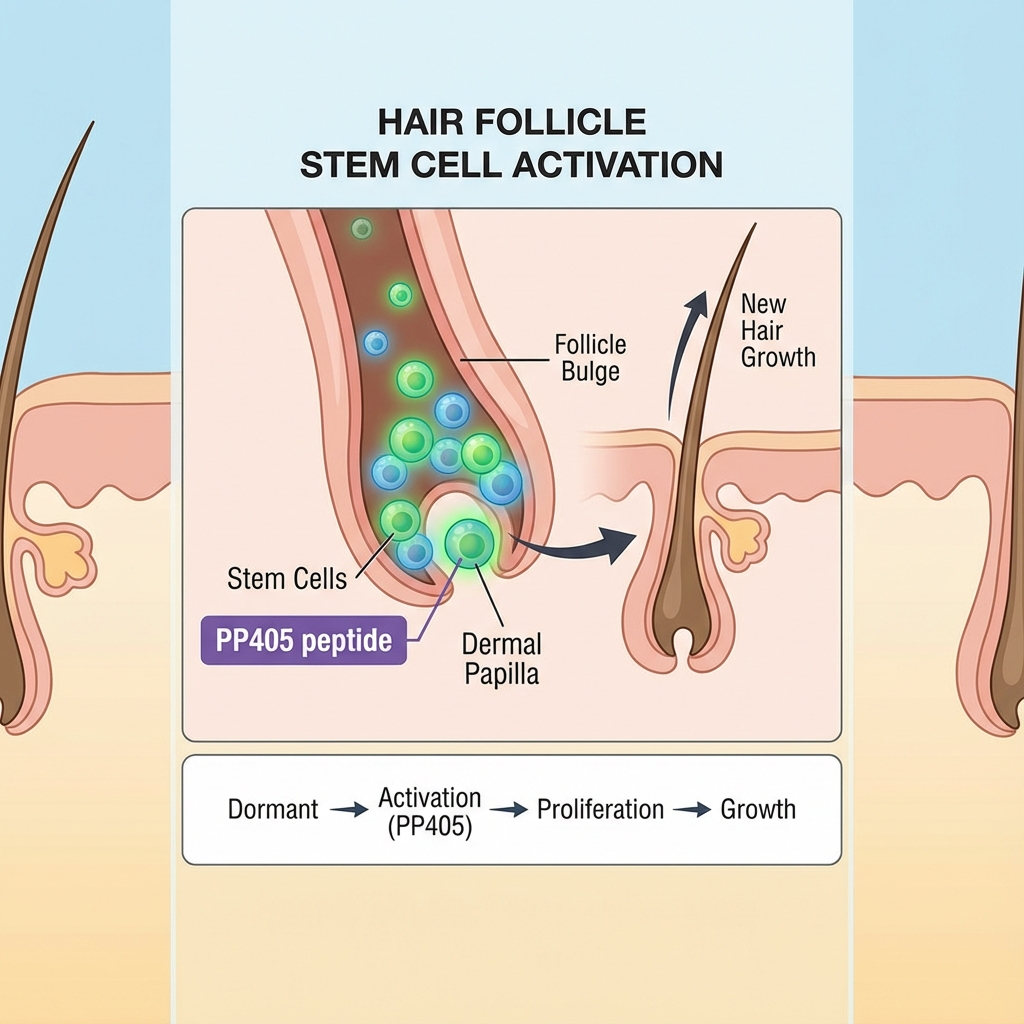
For decades, the hair loss industry has been stuck in a binary: either block hormones (Finasteride/Dutasteride) or increase blood flow (Minoxidil). PP405 represents a standardized "Third Mechanism": Metabolic Reactivation. Developed by Pelage Pharmaceuticals (based on research from UCLA), PP405 is a novel small molecule designed to reactivate the dormant stem cells within the hair follicle by altering their fuel source.
Mechanism of Action: The "Glycolysis Switch"
Every hair follicle contains Likely-Label-Retaining Cells (LRCs)—a fancy name for hair follicle stem cells. In male pattern baldness (Androgenic Alopecia), these cells aren't dead; they are "quiescent" (asleep). Research identified that the metabolic state of these cells dictates their activity:
- Oxidative Phosphorylation: The "Sleep" Mode. Dormant stem cells rely on this efficient but slow energy pathway.
- Glycolysis: The "Growth" Mode. Active stem cells producing hair rely on lactate production (glycolysis).
How PP405 Works:
- Target: It inhibits a specific gateway on the mitochondria called the Mitochondrial Pyruvate Carrier (MPC).
- Effect: By blocking pyruvate from entering the mitochondria, the cell is forced to switch to Glycolysis to make energy.
- Result: This metabolic shock acts as a "biological trigger," waking up the stem cell and pushing the follicle from Telogen (Resting) into Anagen (Growth).
Clinical Data (Phase 2a Results)
Pelage Pharmaceuticals released preliminary data from their Phase 2a trials, and the results are statistically significant.
- Dosage: The trial tested a 0.05% topical solution applied once daily.
- Efficacy: after 8 weeks, patients showed a statistically significant increase in hair density compared to placebo.
- Responder Rate: 31% of men saw a >20% increase in hair counts.
- Safety: Zero reported sexual side effects. Because it does not interact with Androgen Receptors or 5-Alpha Reductase, there is no risk of ED, libido loss, or brain fog.
Comparison to Standards
| Feature | Finasteride | Minoxidil | PP405 |
|---|---|---|---|
| Mechanism | Hormone Blocker (DHT) | Vasodilator | Metabolic Switch (MPC) |
| Target | 5-AR Enzyme | Blood Vessels | Stem Cell Mitochondria |
| Sexual Side Effects | Risk (1-2%) | None | None |
| Systemic Absorption | High | Low | Minimal |
| Status | FDA Approved | FDA Approved | Phase 2 Clinical Trials |
Availability & Timeline
PP405 is not yet FDA approved.
- Current Status: Phase 2b trials are underway to determining optimal dosing.
- Est. Launch: Phase 3 is expected to commence in 2025/2026, with a potential market release between 2027-2028.
- Grey Market: Some chemical suppliers offer "Research Grade" PP405, but purity is highly variable. Given the novel mechanism, waiting for the official pharmaceutical release is recommended for safety.