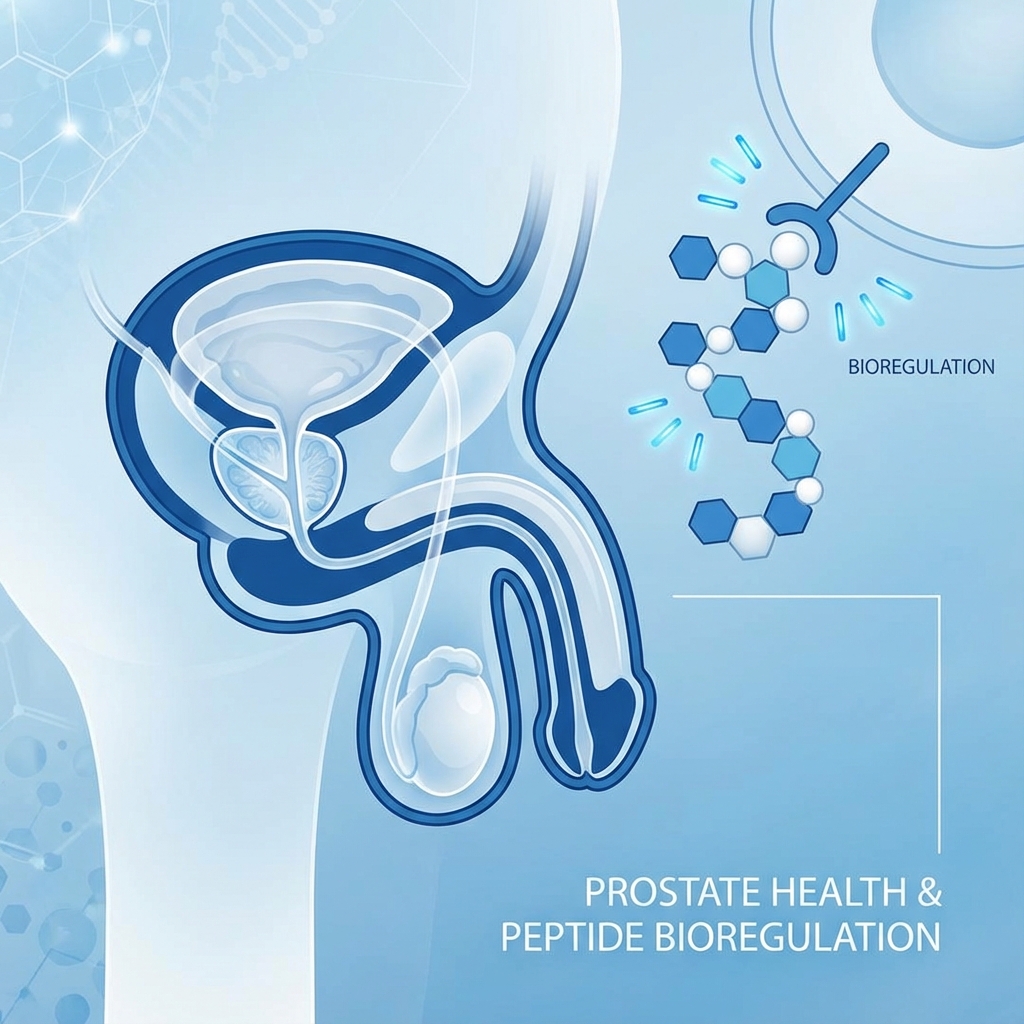
Prostamax Peptide: Prostate Tissue and Cellular Aging Research
Prostamax peptide research reveals chromatin modulation, gene expression changes, and tissue-specific effects in prostate and lymphocyte studies.
Table of Contents
Key Highlights
- Prostamax induces measurable changes in chromatin thermal stability, causing relaxation of the 30 - nm chromatin fiber into 10 - nm filaments in human lymphocyte studies - Research demonstrates significant activation of ribosomal genes and increased nucleolus organizer regions in treated cell cultures - Studies in prostate tissue models show 22.4 % reduction in acini epithelium area with corresponding decreases in inflammatory markers - The peptide shows selective deheterochromatinization effects, potentially reversing age - related chromatin condensation patterns observed in aged cell populations
How Prostamax Modulates Chromatin Structure
Chromatin Relaxation and Thermal Stability Changes
Differential scanning calorimetry studies on human lymphocytes reveal that Prostamax induces measurable changes in chromatin thermal stability.The peptide causes a redistribution of heat among endotherms T(d)III and T(d)IV, with temperature shifts of 2.9°C and 1.0°C respectively.
This thermal redistribution correlates with a relaxation in chromatin structure.The research shows a transition of the 30 - nm - thick fiber into a 10 - nm filament, suggesting the peptide alters the compaction state of chromatin.
The mechanism involves subtle structural modifications in nucleosomal organization.Treated lymphocytes show decreased denaturation temperatures(T(d)VII and T(d)VIII) compared to controls, indicating adjustments in both the 10 - nm filament and 30 - nm fiber architecture.
These changes in chromatin organization may influence gene accessibility.The relaxed chromatin state could allow transcriptional machinery greater access to previously condensed genomic regions.
Heterochromatin Decondensation in Aged Cells
Research on aged lymphocyte cultures(75 - 88 years) shows that Prostamax induces deheterochromatinization across multiple chromatin regions.The peptide affects both structural and facultative heterochromatin through epigenetic remodeling mechanisms.
Studies document effects on constitutive heterochromatin, including pericentromeric regions, telomeric areas, and nucleolar organizer regions(NORs).Increased sister chromatid exchanges in telomeric regions indicate chromatin decondensation at these sites.
Each peptide bioregulator selectively deheterochromatinizes specific chromosome regions.This selectivity suggests the peptide may release genes repressed by age - related chromatin condensation in targeted genomic locations.
Gene Expression and Transcriptional Mechanisms
Ribosomal Gene Activation
Ag - staining techniques show that Prostamax increases Ag - positive nucleolus organizer regions(NORs) in acrocentric chromosomes, both in association and isolation.This finding indicates activation of ribosomal genes and increased potential for protein synthesis.
The changes in NOR activity suggest the peptide influences ribosomal RNA gene transcription.These genes code for components needed in ribosome assembly, and their activation could affect overall cellular protein production capacity.
Research shows Prostamax appears to increase gene expression at multiple levels through its influence on ribosomes and densely packed chromatin in lymphocytes.This establishes conditions for heightened transcriptional activity in treated cell populations.
DNA - Peptide Binding Interactions
Peptides with specific sequences demonstrate sequence - specific binding to double - stranded DNA in promoter regions.Short peptides containing Lys, Glu, Asp residues can bind to histone proteins H1, H2b, H3, and H4.
This binding capacity allows the peptides to increase transcription availability of gene promoter zones.Research shows these interactions modulate genes involved in neurogenesis(NES, GAP43), senescence(p16, p21), and functional activity(IGF - 1, FOXO1, TERT).
The tripeptide Lys - Glu - Asp(KED), sharing three amino acids with Prostamax, regulates expression of cell aging markers(p16, p21).It also affects neuronal differentiation markers(nestin, GAP43) and genes implicated in neuropathology(SUMO, APOE, IGF1).
Research Observations in Specific Tissues
Prostate Tissue Culture Studies
In experimental models using benign prostatic hyperplasia in rats, the tetrapeptide Lys - Glu - Asp - Pro showed 22.4 % reduction in the area of acini epithelium compared to controls.The study documented statistically significant decreases in prostate mass(24 %), weight coefficient(25 %), and volume(40 %).
The peptide treatment transformed inflammatory cell infiltration patterns from diffuse to localized.This change suggests modulation of immune cell distribution within prostate tissue structures.
Research in prostatic gland tissue cultures indicates the peptide may support reparative processes.Studies note reductions in markers associated with sclerotic and atrophic changes in treated tissue samples.
Chronic aseptic prostatitis models show potential alleviation of inflammation - related observations included swelling, vessel hyperemia, and cellular infiltration.These findings position Prostamax as a research tool for investigating prostate tissue responses in controlled experimental conditions.
Lymphocyte and Immune Cell Research
The tripeptide Lys - Glu - Asp demonstrates proliferation - stimulating and apoptosis - inhibiting activity in organotypic cultures of neuroimmunoendocrine system cells.Studies show decreased expression of apoptosis marker p53 and increased proliferation marker Ki - 67 in pineal gland cultures.
Effects appear more pronounced in cultures derived from aged animals compared to young animals.This age - dependent response suggests the peptide may preferentially affect cellular populations experiencing age - related changes.
Research documents increased expression of lymphocyte marker CD5 and macrophage marker CD68 in treated cultures.These changes indicate modulation of immune cell phenotypes and potential shifts in immune cell populations.
The peptide appears to affect gene expression at multiple levels through its influence on chromatin structure in lymphocytes.This creates conditions that may allow for altered transcriptional programs in immune cells.
Cellular Aging and Proliferation Research
Short peptides containing the Lys - Glu - Asp sequence stimulate proliferation and inhibit apoptosis in pineal gland tissue cultures.Research shows effects are more pronounced in aged cell populations, measured by decreased p53 expression and increased Ki - 67 expression.
Related peptides(KED, AEDG) reduce gene expression and synthesis of replicative senescence proteins p16 and p21 in mesenchymal stem cell cultures.This suggests potential modulation of cell cycle arrest pathways associated with cellular aging.
The mechanism appears to involve reversal of age - related heterochromatinization.This progressive condensation of chromatin during aging silences previously active genes, and peptide treatment may restore accessibility to repressed genomic regions.
Quality Standards and Analytical Verification
Research - grade Prostamax requires verification through multiple analytical methods.High - performance liquid chromatography(HPLC) confirms purity levels above 99 %, while liquid chromatography - mass spectrometry(LC - MS) verifies molecular structure and sequence accuracy.
Testing protocols include sterility verification, endotoxin screening, and chemical contaminant analysis.This multi - layered approach allows research teams to verify peptide quality before initiating experimental protocols.
Storage at - 20°C maintains lyophilized peptide stability for 3 - 5 years.Reconstituted peptides require sterile conditions and shorter - term use to preserve molecular integrity throughout experimental timelines.