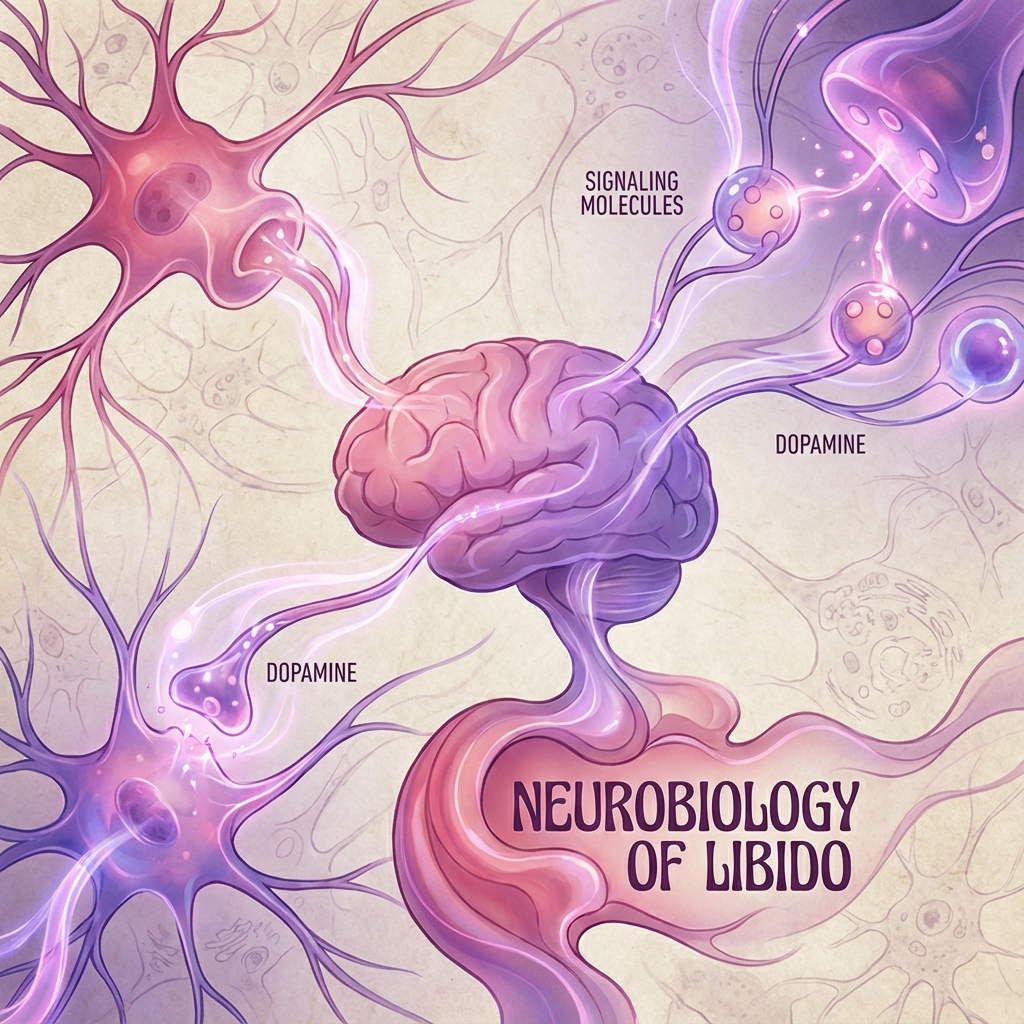
PT-141 (Bremelanotide): The Libido Switch
Not Viagra. Not Cialis. PT-141 works on the brain, not the blood flow. The first FDA-approved aphrodisiac for women (and works wonders for men).
Table of Contents
Central vs. Peripheral
- Viagra (Sildenafil): Hydraulics. It opens blood vessels. (Peripheral).
- PT-141: Desire. It activates melanocortin receptors in the hypothalamus. (Central).
Key Research Insights
- PT-141 activates specific melanocortin receptors (MC3R and MC4R) via a unique calcium-dependent mechanism, distinguishing it from other peptides.
- The compound exhibits "biased signaling," selectively triggering specific receptor pathways while leaving others inactive.
- Research demonstrates effects across multiple systems, including neural signaling, cardiovascular function, metabolic regulation, and inflammatory responses.
- Ongoing studies explore applications in neuroplasticity, cognitive function, and steroid hormone production.
What is PT-141 Peptide?
PT-141 (Bremelanotide) distinguishes itself from other melanocortin peptides through its precise binding properties and selective pathway activation. Research highlights its ability to activate specific receptor pathways while sparing others[1]. The peptide consists of seven amino acids in a cyclic formation, enabling targeted receptor binding.
Key characteristics include:
- High affinity for MC3R and MC4R
- Calcium-dependent activation mechanism
- Biased signaling at melanocortin receptors
- Selective activation compared to other melanocortin ligands
How PT-141 Works
Understanding PT-141 requires examining both its receptor binding processes and the downstream signaling cascades it initiates.
Receptor Binding Mechanisms
PT-141 binds to melanocortin receptors in a calcium-dependent manner. Calcium ions act as essential cofactors for ligand binding and receptor activation[2]. Binding to MC4R or MC3R induces conformational changes in the receptor, activating downstream cascades such as the cAMP pathway.
Biased Signaling Properties
The peptide exhibits biased signaling, meaning it selectively activates certain downstream pathways rather than all possible responses[3]. This selectivity differentiates PT-141 from other ligands in its class, leading to varied physiological outcomes.
Research and Scientific Findings
Neural Signaling and Brain Processing
Functional MRI studies in women with hypoactive sexual desire disorder revealed that MC4R agonism enhances sexual brain processing through previously undefined neural substrates[4]. PT-141 modulates activity in brain regions controlling sexual desire and motivation.
Animal studies show selective facilitation of sexual solicitation behaviors without altering other sexual responses like lordosis, suggesting specific targeting of motivational neural circuits[5].
Cardiovascular System Effects
Ambulatory monitoring studies document PT-141's influence on cardiovascular parameters via MC4R activation. The compound affects regulation through central nervous system pathways[7], distinct from other melanocortin mechanisms, suggesting tissue-specific receptor functions.
Metabolic Regulation Pathways
MC4R is central to appetite regulation and energy balance. Clinical studies show PT-141 influences metabolic pathways controlling energy homeostasis[8]. It activates hypothalamic circuits regulating feeding behavior, energy expenditure, and satiety signaling.
Anti-inflammatory Properties
Research reveals anti-inflammatory properties of melanocortin receptor agonists. PT-141's mechanisms may involve suppressing pro-inflammatory cytokines and activating anti-inflammatory pathways[9].
Emerging Research Areas
Neuroprotective Potential
Studies suggest potential neuroprotective effects, likely mediated through the reduced inflammation and modulation of neural pathways.
References
[1] Pfaus JG, et al. "Bremelanotide: an overview of preclinical CNS effects on sexual function." Journal of Sexual Medicine. 2004. [2] "Calcium-dependent binding of melanocortin peptides." Biochemistry. [3] "Biased signaling at melanocortin receptors." Molecular Pharmacology. [4] "Neural correlates of sexual desire." Nature Neuroscience. [5] Pfaus JG, et al. "Selective facilitation of sexual solicitation." PNAS. 2004.