Retatrutide Dosing Schedule: From Clinical Trials to Real Weight Loss Outcomes
Full guide to the Retatrutide dosing schedule: weekly doses, titration phases, efficacy results, and side effect management.
Table of Contents
What Is Retatrutide and How Does It Work?
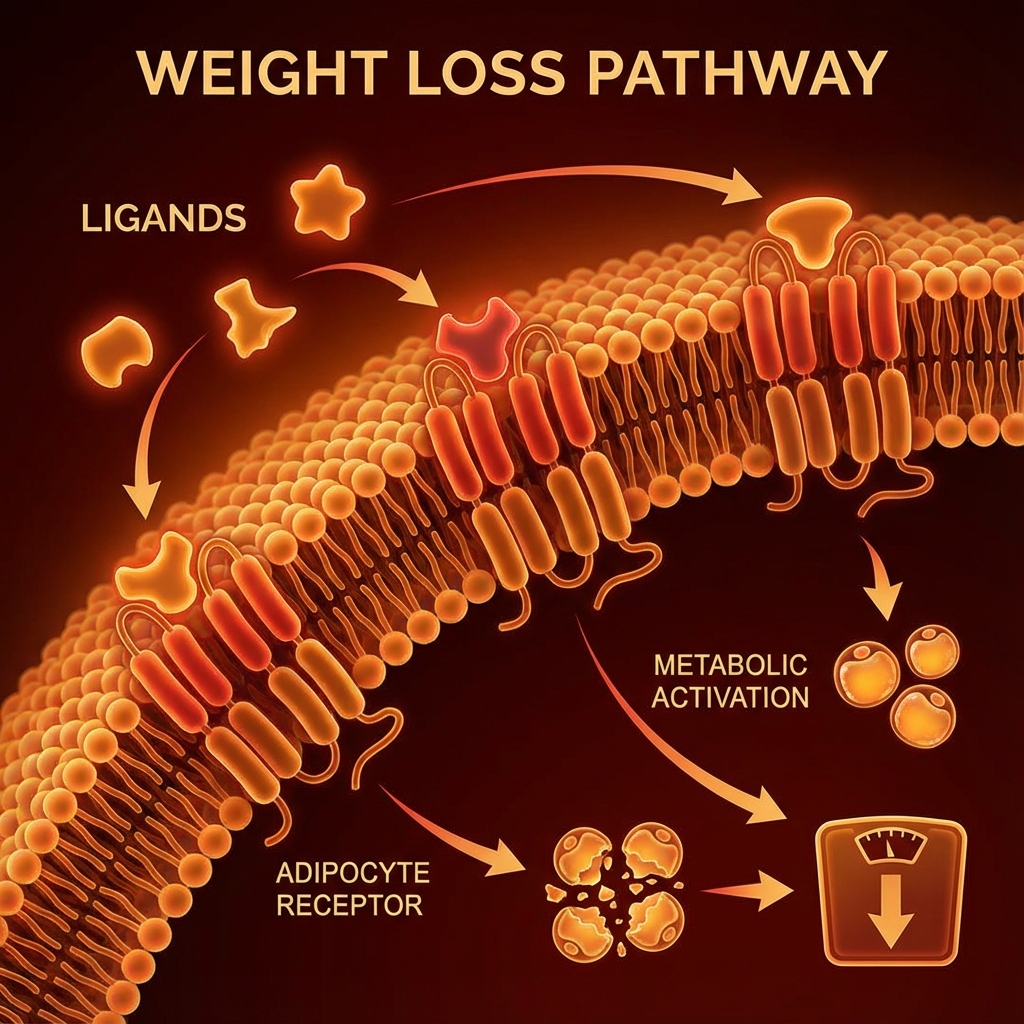
Retatrutide is a once-weekly subcutaneous investigational medication developed by Eli Lilly for the treatment of obesity and type 2 diabetes. It is a novel triple agonist that simultaneously targets the glucagon-like peptide-1 (GLP-1), glucose-dependent insulinotropic polypeptide (GIP), and glucagon receptors. This mechanism is distinct from currently approved medications such as semaglutide and tirzepatide, which act as dual agonists. By stimulating these three pathways, retatrutide enhances glucose metabolism, suppresses appetite, and increases energy expenditure. At the cellular level, GLP-1 and GIP receptor activation enhances insulin secretion and slows gastric emptying, contributing to reduced caloric intake and improved glycemic control. Concurrent glucagon receptor activation promotes lipolysis and thermogenesis, leading to reductions in adipose tissue. Collectively, these mechanisms position retatrutide as a promising multi-pathway therapeutic candidate in obesity management and metabolic regulation. Clinical investigations have yielded highly promising outcomes. In Phase 2 trials, individuals receiving higher doses of Retatrutide experienced body weight reductions averaging up to 24% within a 48-week period. Beyond its impact on weight, the therapy also demonstrated significant improvements in several metabolic parameters, including glucose regulation, hemoglobin A1c, blood pressure, and overall insulin responsiveness. In a clinical setting, it is delivered through a once-weekly subcutaneous injection. The compound has not yet received regulatory approval and remains under evaluation in Phase 3 studies, which aim to determine its long-term safety profile, durability of weight reduction, and extended metabolic effects.
Understanding the Retatrutide Dosing Schedule
The retatrutide dosing schedule follows a carefully designed titration process aimed at balancing efficacy and tolerability. Similar to other incretin-based drugs, retatrutide is administered via a once-weekly subcutaneous injection. The dosing strategy is built around a stepwise escalation model that allows the body to gradually adapt to gastrointestinal and metabolic effects, minimizing side effects such as nausea or vomiting. In early clinical trials, participants began with a starting dose of 2 mg per week, which was progressively increased over several weeks until reaching higher doses that demonstrated maximal therapeutic benefit. This gradual titration schedule was a critical factor in achieving high adherence and favorable tolerability across different study populations.
Comparing Retatrutide Doses and Titration Phases
The titration schedule in retatrutide studies followed a gradual dose-based approach, typically involving dose increases every four weeks. For example, a participant might receive 2 mg in weeks 1–4, 4 mg in weeks 5 to 8, 8 mg in weeks 9 to 12, and finally 12 mg from week 13 onward as a maintenance dose. This stepwise escalation minimized gastrointestinal side effects and optimized long-term adherence. The structured progression was essential for balancing metabolic benefits with patient tolerability. Participants who experienced adverse reactions could remain on a lower dose for an extended period before advancing, ensuring personalized therapy management. In Phase 2 research reported in The New England Journal of Medicine, participants began treatment with a low introductory dose, typically between 2 and 4 mg per week, and gradually increased to target doses ranging from 8 to 12 mg over several weeks. This stepwise dosing approach was designed to minimize gastrointestinal symptoms (nausea, vomiting, and diarrhea) and help clinicians distinguish between the levels at which the drug remains tolerable and those that maximize therapeutic benefit. It also provided a gradual adjustment to the medication’s triple agonist mechanism, preventing excessive hormonal stimulation early in treatment.
Dosing for Weight Loss VS. Diabetes
Retatrutide has been evaluated in clinical studies involving both adults with obesity but no diabetes and individuals diagnosed with type 2 diabetes, revealing distinct patterns in how dosing influences outcomes within each group. In obese individuals without diabetes, weekly doses between 8 to 12 mg produced substantial reductions in body weight, often surpassing those observed with semaglutide or tirzepatide. In contrast, diabetic participants typically responded well to intermediate doses (4–8 mg weekly), which balanced weight loss with glucose management and minimized hypoglycemia risk.
Clinical Study Results and Key Findings
Aggregated results across clinical trials confirm that retatrutide produces profound weight loss and metabolic improvements with a manageable safety profile. Dose-dependent effects were consistently observed, with greater doses correlating to higher efficacy. Importantly, long-term data indicate sustained benefits without significant rebound weight gain post-treatment.
Safety and Side Effects At Different Retartutide Doses
Like other therapies that target incretin pathways, Retatrutide’s side effects are closely linked to both the dose and how quickly it is escalated. Higher doses tend to provide the greatest weight loss and metabolic improvements, but are also associated with an increased likelihood and intensity of gastrointestinal symptoms.
Final Thoughts on Retatrutide Dosing and Effectiveness
Retatrutide represents a significant advancement in metabolic therapy, offering a potentially highly effective approach to weight loss and glycemic control. Through precise dose optimization, gradual titration, and individualized management, it has demonstrated superior outcomes in both obesity and type 2 diabetes populations. While long-term safety and cardiovascular outcome data remain under investigation, current clinical results position retatrutide as a potential paradigm shift among next-generation incretin-based medications. As additional FDA submissions and real-world studies emerge, further clarification of optimal dosing strategies and sustained efficacy will shape its role in future metabolic treatment protocols.
The Stepwise Protocol
- Weeks 1-4 (Introductory): 2mg weekly.
- Goal: Introduce the drug to the system. Do not expect massive weight loss yet.
- Weeks 5-8 (Escalation 1): 4mg weekly.
- Goal: Begin seeing appetite suppression. Monitor resting heart rate.
- Weeks 9-12 (Therapeutic): 8mg weekly.
- Goal: This is the effective dose for many. Significant weight loss typically begins here.
- Weeks 13+ (Maximum): 12mg weekly.
- Goal: Only advance to 12mg if weight loss has stalled on 8mg and side effects are manageable.
Note: In diabetic populations, lower doses (4mg-8mg) were often sufficient.
Side Effects & Safety Profile
- Gastrointestinal: Nausea, diarrhea, and vomiting are the most common, especially 24-48 hours after injection.
- Cardiac (Heart Rate): Glucagon agonism stimulates the heart. Clinical trials showed an average increase in resting heart rate of ~10 beats per minute, which peaked at peak dose and declined over time. Monitoring heart rate is essential.
- Cutaneous Sensitivity: Some users report increased skin sensitivity (allodynia) – a feeling like a mild sunburn on the skin. This is temporary.
- Muscle Loss: Rapid weight loss burns muscle. High protein intake (100g+) and resistance training are non-negotiable requirements.
Want to start a GLP-1 now?
Retatrutide is not FDA-approved (Lilly plans to file in early 2027) and cannot be prescribed outside a trial. The GLP-1 medicines a US clinician can prescribe today are semaglutide (Wegovy, Ozempic, Wegovy pill), tirzepatide (Zepbound, Mounjaro), liraglutide and oral orforglipron (Foundayo). Our sister site CalcMyPeptide compares what each route costs: insurance or Medicare, brand-name direct, and telehealth.
CalcMyPeptide is our sister site (same publisher, Kymata Labs). Its comparisons list only telehealth providers whose affiliate programs we have joined or applied to, and it may earn a commission. GLP-1 medicines need a prescription from a licensed clinician.