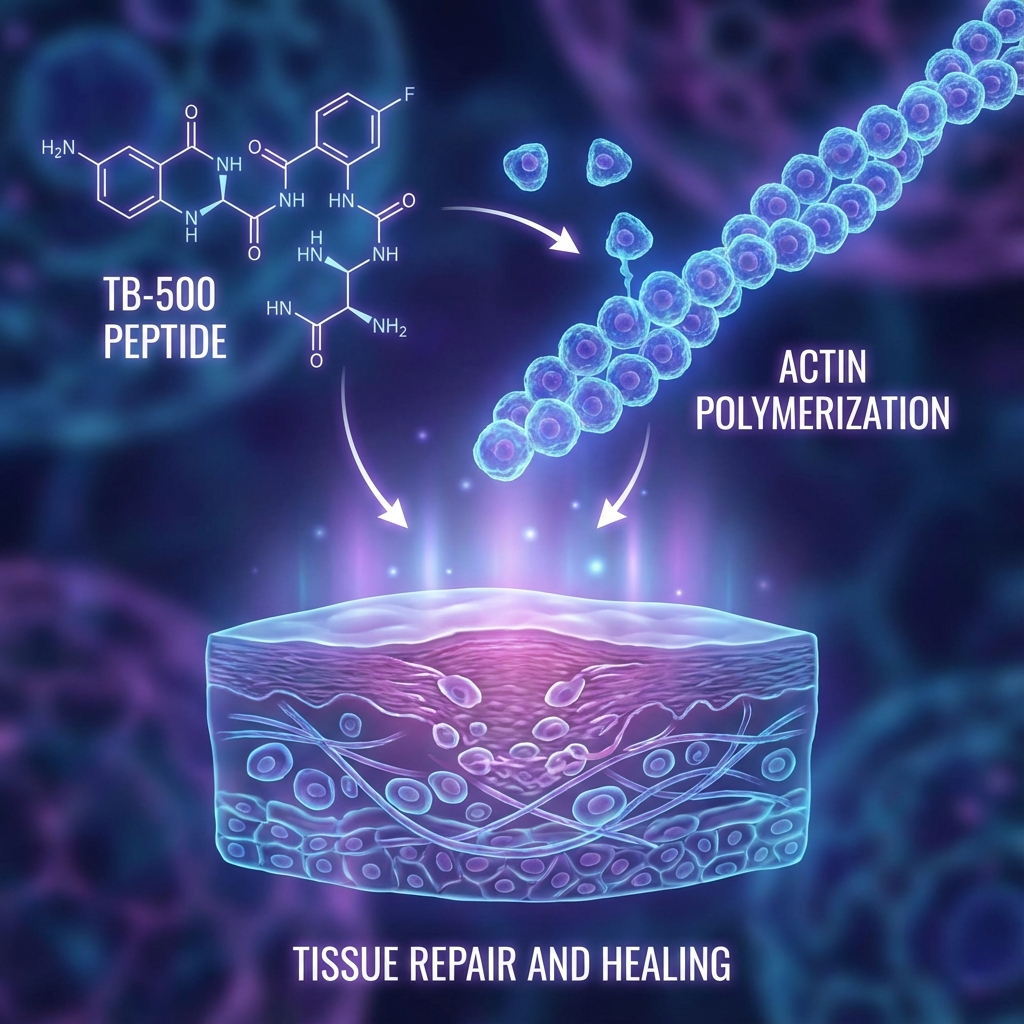
TB-500 Peptide Research: The Science Behind Thymosin Beta-4
TB-500 (thymosin beta-4) peptide research guide exploring cardiovascular, neurological, and wound healing studies for research applications.
Table of Contents
Key Research Insights
- TB - 500 is a synthetic version of Thymosin Beta - 4, a major actin - sequestering protein - Its primary mechanism involves regulating actin polymerization, essential for cell migration and repair - Research highlights its potential in accelerating wound healing, reducing fibrosis, and promoting tissue regeneration - Studies span cardiovascular recovery, neurological injury, and corneal repair
TB - 500 Peptide Structure and Mechanisms
TB - 500 consists of 43 amino acid residues with a molecular weight of 4, 982 Da and an isoelectric point of 5.1.The peptide’s structure features a blocked N - terminus through acetylation, which research shows is essential for proper function. The peptide operates primarily through G - actin sequestration, making it the major monomeric actin - sequestering molecule in eukaryotic cells.This mechanism allows TB - 500 to regulate actin polymerization and depolymerization, processes that are central to cellular migration and tissue repair. Key Structural Features:
- 43 amino acid residues
- Molecular weight: 4, 982 Da
- Isoelectric point: 5.1
- N - terminal acetylation required for activity Research has identified several active fragments within the TB - 500 sequence, each with distinct biological properties.
- Isoelectric point: 5.1
- Molecular weight: 4, 982 Da
Cardiovascular Research Applications
TB - 500 has been extensively studied in cardiovascular research, with animal models showing promising results across multiple cardiac conditions.The peptide appears to work through both immediate protective mechanisms and longer - term regenerative pathways.
Cardiac Tissue Studies
In models of myocardial infarction(heart attack), TB - 500 treatment promotes the survival of cardiomyocytes and stimulates the growth of new blood vessels(angiogenesis) into the damaged tissue. It also activates epicardial progenitor cells, which migrate into the heart muscle and differentiate into new vascular cells and cardiomyocytes.
Neurological Research Findings
TB - 500 has been studied across multiple neurological conditions, with research spanning traumatic brain injury, stroke, and neurodegenerative diseases.The peptide appears to offer both acute protective effects and longer - term regeneration effects.
Traumatic Brain Injury and Stroke
By reducing inflammation and promoting oligodendrocyte precursors(cells that make myelin), TB - 500 aids in the repair of neural circuits and functional recovery in rodent models of brain injury.
Wound Healing and Tissue Regeneration Studies
TB - 500 has been studied extensively in wound healing research, with studies covering both dermal and corneal applications.The peptide appears to work through multiple pathways to speed healing and reduce inflammation.
Dermal Wound Research
It accelerates the migration of keratinocytes and endothelial cells to the wound site, closing the gap faster.Crucially, it also modulates collagen deposition, leading to better organized tissue and less scarring.
Ophthalmic Research
In corneal injuries, TB - 500 promotes rapid healing without the hazing or scarring that often impairs vision, making it a key candidate for eye injury research.
Clinical Research Progress
TB - 500 has progressed through multiple phases of clinical trials, with ophthalmic applications showing the most advanced development.Current research focuses on safety profiles and therapeutic windows.
Emerging Research Areas
Scientists are exploring TB - 500's potential in metabolic disorders (improving insulin sensitivity) and in combatting fibrosis in organs like the liver and kidneys.