Tesamorelin vs. Sermorelin: Battle of the GHRH Analogues
Both stimulate natural growth hormone, but one is a gentle wellness tool, and the other is a potent fat-burning drug. Which is right for you?
Table of Contents
Key Research Insights
- Tesamorelin (Egrifta) is a stabilized GHRH analog with a long half-life, specifically FDA-approved for reducing visceral adipose tissue in HIV-associated lipodystrophy.
- Sermorelin corresponds to the first 29 amino acids of endogenous GHRH and is used primarily for anti-aging and general growth hormone restoration.
- Research highlights Tesamorelin's superior efficacy in targeting visceral fat reduction compared to enhancing overall IGF-1 levels.
- Sermorelin is often preferred for sleep quality and general well-being due to its milder, more physiological pulse profile.
Comparative Pharmacology
Tesamorelin: Structure and Stability
Tesamorelin is a synthetic peptide consisting of the 44 amino acids of human GHRH with a trans-3-hexenoic acid group added to the N-terminus. This modification significantly increases its resistance to enzymatic degradation by DPP-IV, extending its half-life and potency[1].
Sermorelin: The Bio-Identical Regimen
Sermorelin (GHRH 1-29) contains the biologically active portion of the 44-amino acid GHRH peptide. It has a very short half-life (10-20 minutes), necessitating frequent daily dosing or combination with half-life extenders to mimic natural pulsatile secretion.
Efficacy in Clinical Studies
Visceral Fat Reduction
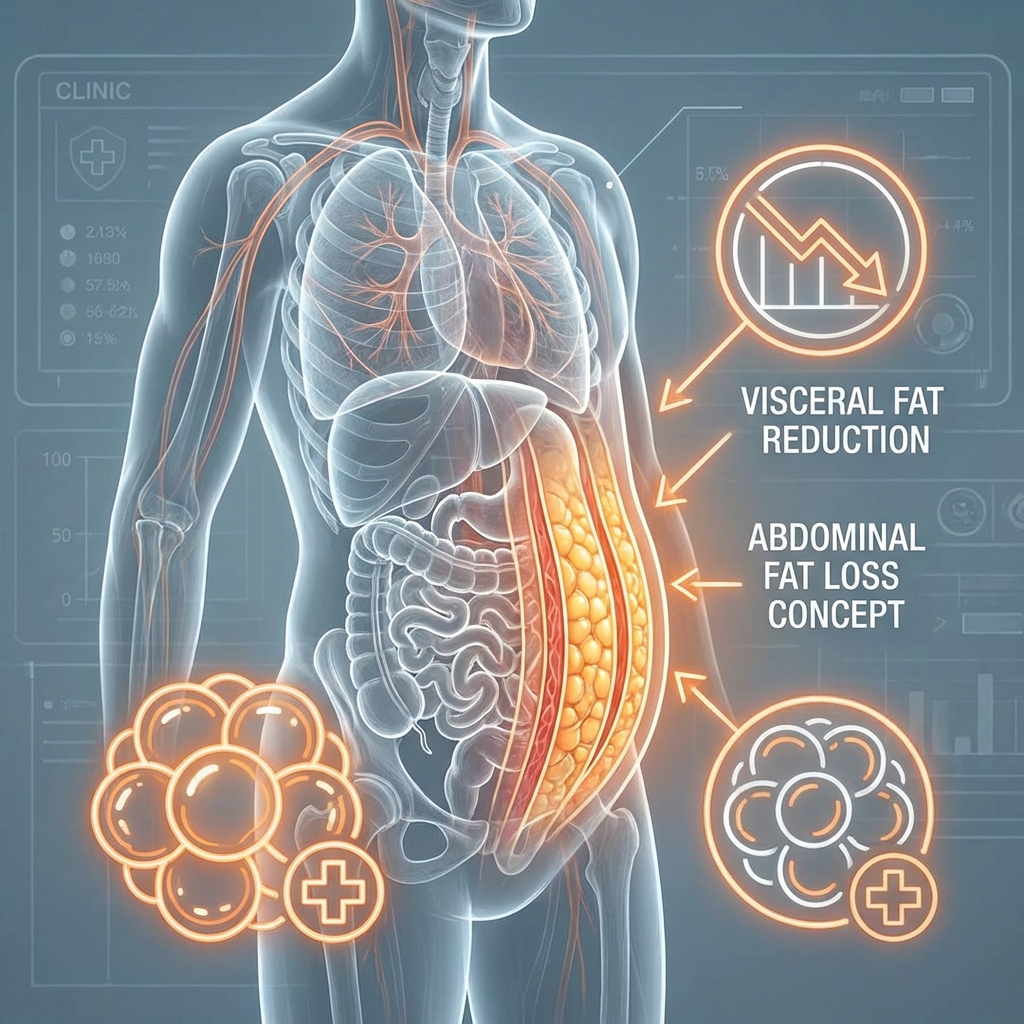
Tesamorelin stands out in clinical trials for its specific ability to reduce visceral adipose tissue (VAT). In phase 3 trials, patients treated with Tesamorelin showed an 14-18% reduction in VAT compared to placebo over 26 weeks[2]. This effect is mediated not just by GH release but by specific lipolytic interactions.
IGF-1 Elevation Comparison
Both peptides elevate IGF-1, but Tesamorelin demonstrates a more sustained elevation due to its stability. Sermorelin produces a "softer" peak, which some researchers argue is safer for long-term maintenance but less effective for rapid body composition changes.
Side Effect Profiles
- Tesamorelin: Associated with higher rates of injection site reactions and potential arthralgia (joint pain) due to higher sustained GH levels.
- Sermorelin: Generally well-tolerated with fewer side effects; flushing and headache are transient.
Conclusion and Research Recommendations
For research focused on strictly visceral adiposity and metabolic syndrome, Tesamorelin presents the superior profile. For general endocrine restoration and sleep architecture research, Sermorelin remains the standard due to its physiological mimicry.
References
[1] Falutz J, et al. "Metabolic effects of a growth hormone-releasing factor in patients with HIV." *New England Journal of Medicine". 2007. [2] "Egrifta (Tesamorelin) prescribing information." Theratechnologies. [3] Walker, RF. "Sermorelin: a review of its clinical data." Clinical Interventions in Aging. 2006.