Thymosin Alpha-1 Guide: The Research Behind the Peptide
Peptide

Thymosin Alpha-1 Guide: The Research Behind the Peptide

Explore how thymosin alpha-1 peptide supports immune function and impacts inflammation. Guide to thymosin alpha 1 and the research behind it.

ByPeptide Bioregulator Atlas
April 10, 2024

Table of Contents

Key Research Insights

  • Thymosin Alpha - 1(Tα1) is a 28 - amino acid peptide that regulates immune response - Research shows it enhances T - cell function, dendritic cell maturation, and antigen presentation - Clinical and laboratory studies investigate its use in infectious diseases(viral, fungal, bacterial) - It demonstrates potential as an adjuvant in cancer therapies and vaccine protocols

Understanding the Thymosin Alpha - 1 Peptide

Thymosin Alpha - 1(Tα1) is a naturally occurring peptide hormone that serves as a central regulator of immune responses.Researchers have successfully synthesized this compound for laboratory investigations, maintaining its biological activity and research potential. The peptide consists of 28 amino acids and originates from thymic tissue.Laboratory studies show it maintains stability under controlled conditions and demonstrates consistent biological activity across different research applications. Scientists classify thymosin as an immunomodulatory compound due to its ability to influence multiple immune pathways simultaneously.Research data indicates it can both enhance and regulate immune responses depending on the experimental context.

Primary Mechanisms of Immune Function

Research reveals thymosin alpha - 1 operates through multiple interconnected pathways that restore and enhance cellular immunity.Scientists have identified several key mechanisms through which this peptide modulates immune responses in laboratory settings.

T - Cell Enhancement and Restoration

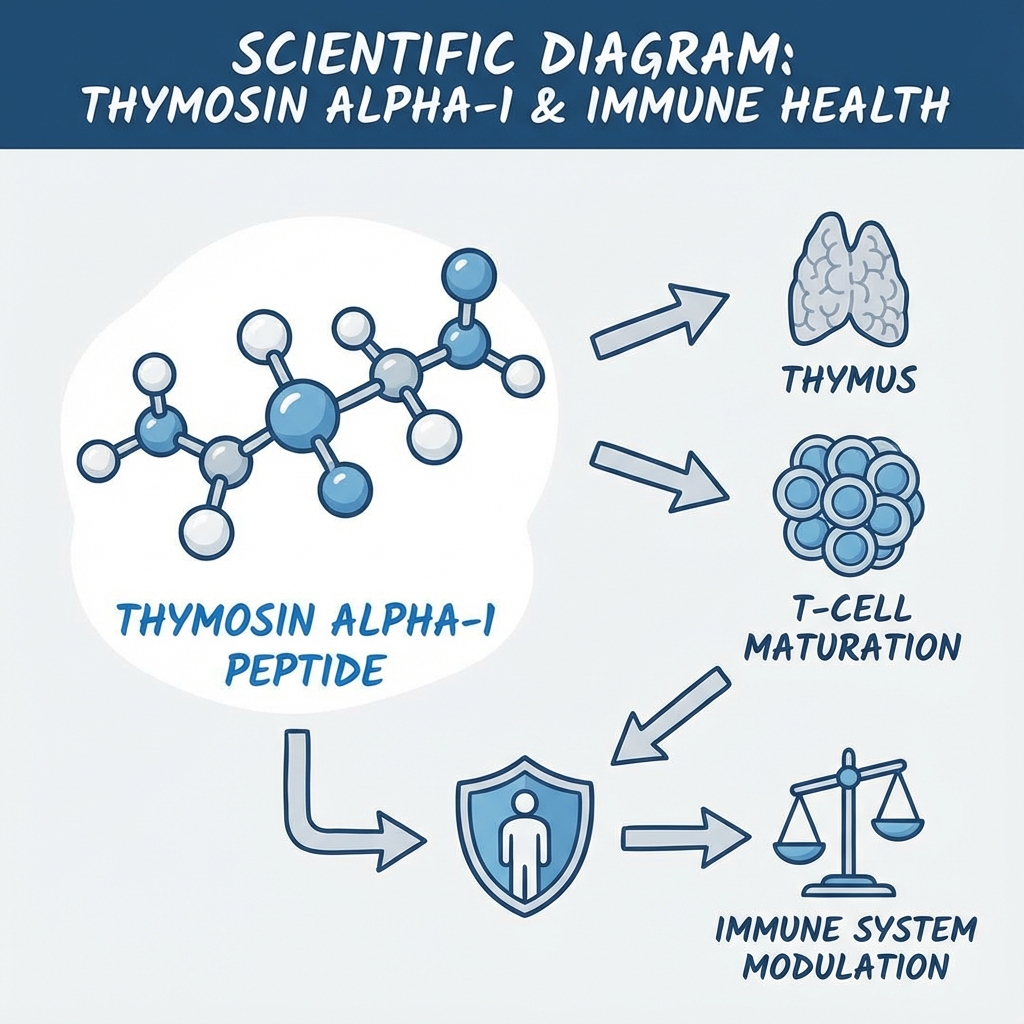
Tα1 promotes the differentiation and maturation of T - cells, which are critical for adaptive immunity.It increases the production of CD4 + (helper) and CD8 + (cytotoxic) T cells. In models of immune suppression, Tα1 helps restore normal T - cell numbers and function.

Thymic Output Stimulation

It acts on the thymus gland to stimulate the release of fresh immune cells into the circulation, counteracting age - related thymic involution(immunosenescence).

Dendritic Cell Activation

Dendritic cells are the "sentinels" of the immune system.Tα1 facilitates their maturation and improves their ability to present antigens to T - cells, bridging innate and adaptive immunity.

Research Applications in Infectious Disease Models

Laboratory investigations across multiple infectious disease models demonstrate consistent immune restoration patterns with thymosin alpha - 1 treatment.Research spans viral, bacterial, and fungal infection studies with measurable clinical endpoints.

Viral Infection Studies

Extensive research exists on Tα1 in models of Hepatitis B and C, where it helps clear the virus by boosting the host's immune response. It is also studied in the context of HIV and respiratory viruses like influenza and coronaviruses.

Fungal and Bacterial Research

In models of sepsis and severe fungal infections(like aspergillosis), Tα1 has been shown to improve survival rates by enhancing immune clearance of the pathogen while preventing cytokine storms.

Cancer Research Applications

Scientists investigate thymosin alpha - 1 as both adjuvant therapy and combination treatment across multiple cancer types.Research focuses on survival outcomes, immune restoration, and synergistic effects with existing therapies.

Solid Tumor Studies

In melanoma and lung cancer models, Tα1 treatment combined with chemotherapy has led to improved tumor responses.It appears to protect immune cells from the toxic effects of chemotherapy agents.

Effect of Thymosin on Inflammation and Immune Response

Research consistently documents thymosin’s ability to modulate inflammatory pathways while restoring productive immune responses.These dual effects contribute to improved outcomes across diverse experimental models. It works to balance the immune system—boosting weak responses against pathogens while dampening excessive inflammation that causes tissue damage.

Share this article